


Brew Guide:
Best Brewed with: Espresso & Chunky Filter
Medium-Light Roaster Influence: We've been really enjoying stretching out the total time of our smaller batch espresso roasts recently - which to be honest, for us means bringing them closer to more "normal" roast times, closer to 8 minutes+ total. If we think of the sort of specs we might give a Central American house filter, when we take a similar coffee like this that bit further for espresso we're adding another 20-25s at the end of the roast and a degree or two more to the end temperature. Especially for a more traditional washed coffee like this, we're looking for ooey-gooey still syrupy body as an espresso and all the sugar browning character, without hitting more heavy generic "roast" flavours of the sort we might find in something like Interval
Best Rested: 3+ weeks
Filter: 65g/L, 92°C when fresh; 90°C when rested
Espresso: 18g/40g/30-34s
We're tasting: Super sweet and syrupy bodied - we get morello cherry compote and buttery stewed apple as the dominant notes, alongside a caramel and milk chocolate sweetness. There's a hint of that classic Catuaí nuttiness, but it integrates into the sugar browning notes to be a bit snickers bar-esq. Really moreish
In Milk: Apple Pie
Traceability
Country of Origin: |
Costa Rica |
Region: |
Tarbaca, Aserrí, San José |
Producer: |
Familia Vásquez |
Farm: |
Roble Negro Micromill, Finca Cedral Alto |
Variety: |
Catuaí |
Elevation: |
1750 - 2000 MASL |
Process: |
Traditional Washed: Ripe cherries picked, floated and sorted before depulping. Parchment fermented in tanks for 36-40 hours, before washing. Dried on raised beds. |
Import Partner: |
Ally Coffee |
Harvest: |
Crop 25/26 - Arrived UK August 7th 2026, Second harvest working with Roble Negro |
The Story
We first met one of the team from Roble Negro in 2024, when our friends at Ally hosted co-founder & director of planning Daniela Vásquez for a visit to London. Having met and enjoyed our conversation, our sourcing efforts in Costa Rica focused on big, bombastic nanolots - extended fermentations, rare varieties, and that sort of thing, and we were fools to miss out on what a GEM Roble Negro turns out to be. We brought their coffee into the range as part of the launch of Interval Espresso, where we look to focus on farms with ecological programs, as well as providing a channel to buy the bulk production from those in our network that is more appropriate for the heavier roast style (as opposed to skimming off the cream of the crop tiny nanos, as our early CR buying was a classic example). Significantly out of season, the Catuaí from Roble Negro held up SO well - far better than we were expecting - and was a truly delicious start to Interval. By pushing ourselves out of our comfort zone to roast that developed (by no means second crack, we should say) we also learned a lot that we were able to apply back to our existing single origin espresso and Facility range, making them better for espresso without necessarily making them any "darker" tasting in the cup.
When the opportunity came around to contract fresh crop from Roble Negro, we jumped at the chance. We booked a larger allocation thinking of perhaps a house filter or entry level filter on the range, and our original biases and our thoughts towards the ceiling of quality of Catuaí kept being thrown in our faces. On blind cupping tables - offer, pre-shipment, landed, roastery arrival - their coffee was coming out amongst our favourites, with great acidity, structure and sweetness. We truly would have been very happy - proud even - to release this amongst our light & lightest range of filters, and it's purely because we booked a larger allocation that we've instead diverted it to run as an espresso - knowing that is a diverse coffee able to shine at a range of roast degrees. We had the pleasure of showcasing a very small amount of this coffee at the latest World of Coffee in Brussels, hanging out on the Ally stand with Alexander Vásquez (co-founder & director quality).
Roble Negro was founded in 2018 by Daniella and Alexander's uncle, Jorge Vásquez Ureña. Jorge bought the farm where the micromill is located - Finca Cedral Alto - in 2007. His childhood was connected to coffee - growing up around the coffee farms of Aserrí where his family worked as pickers, but after gaining an accounting degree he spent 2 decades working at the National Bank of Costa Rica before founding a recycling company (Compañía de Reciclaje Ecológico). It's the merging of the thoughts of ecology and sustainability with coffee production that really sets Roble Negro apart - this is a farm where the circular economy is built into every decision, their coffee exists to fund the conservation of rainforest and freshwater sources, not the other way around
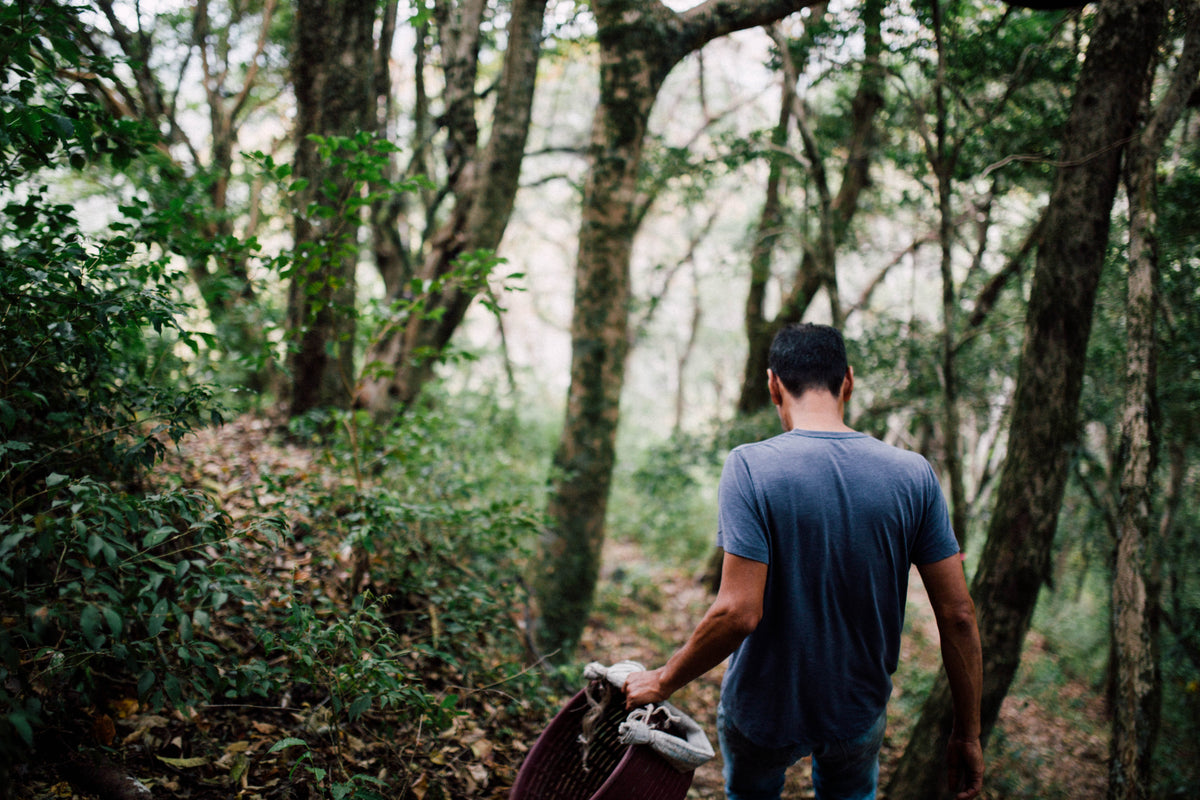
Of the 22.5 ha total area of the farm, 12 ha are kept aside for primary and secondary forest with a further 3 ha undergoing reforestation, 5 ha are dedicated to coffee production, with the remaining split with animal paddocks (sheep & cattle), a vegetable garden and the wet mill itself. There are six water sources on the farm, which allows for efficient drip irrigation systems, and they have a commitment to zero pollution of the waterways - thesugar/acid/microbes laden "agua miel" from the fermentation tank are used to irrigate paddocks and corn fields. They use zero artificial agrichemical inputs - fertiliser comes from vermicompost of coffee pulp, and fungicides come from cultivated microbes from forest leaves as well as calcium sulfate. Rather than use herbicides for weed control, they use grazing sheep to clear the ground around the trees (which has additional fertilisation benefits).
This dedication to forward looking regenerative and sustainable agriculture, as well as forest preservation is truly laudable. And it shows in the cup - this is among one of the best traditionally washed Catuaí's we've had, and shows what can happen when healthy trees grow in shade with healthy soil microbiomes. In addition to Gesha, the farm has recently begun planting new varieties as well as some new plots reaching production - Venecia, Villa Sarchi, and most recently the F1 hybrid Esperanza. We're stoked to see what they come up with from these plots, and we're certain that Roble Negro is going to become a staple part of our Costa Rican offer for many seasons to come yet.
- Choosing a selection results in a full page refresh.
- Opens in a new window.