

Brew Guide:
Best Brewed with: Filter
Light Roaster Influence: A very similar approach to our washed "lightest" roasts, we've extended the development time about 10-15s and increased the end temperature by a degree. This coffees qualities exist mostly in its acidity, body and sweetness instead of aromatics, so we've sought to emphasise them more
Best Rested: 3 weeks
Filter: 62g/L, 95°C when fresh but when well rested you can go down to 91-92°C
Espresso: 18g/44g/28-32s. We prefer more trad approaches but can be turbo/soup'd
We’re tasting:
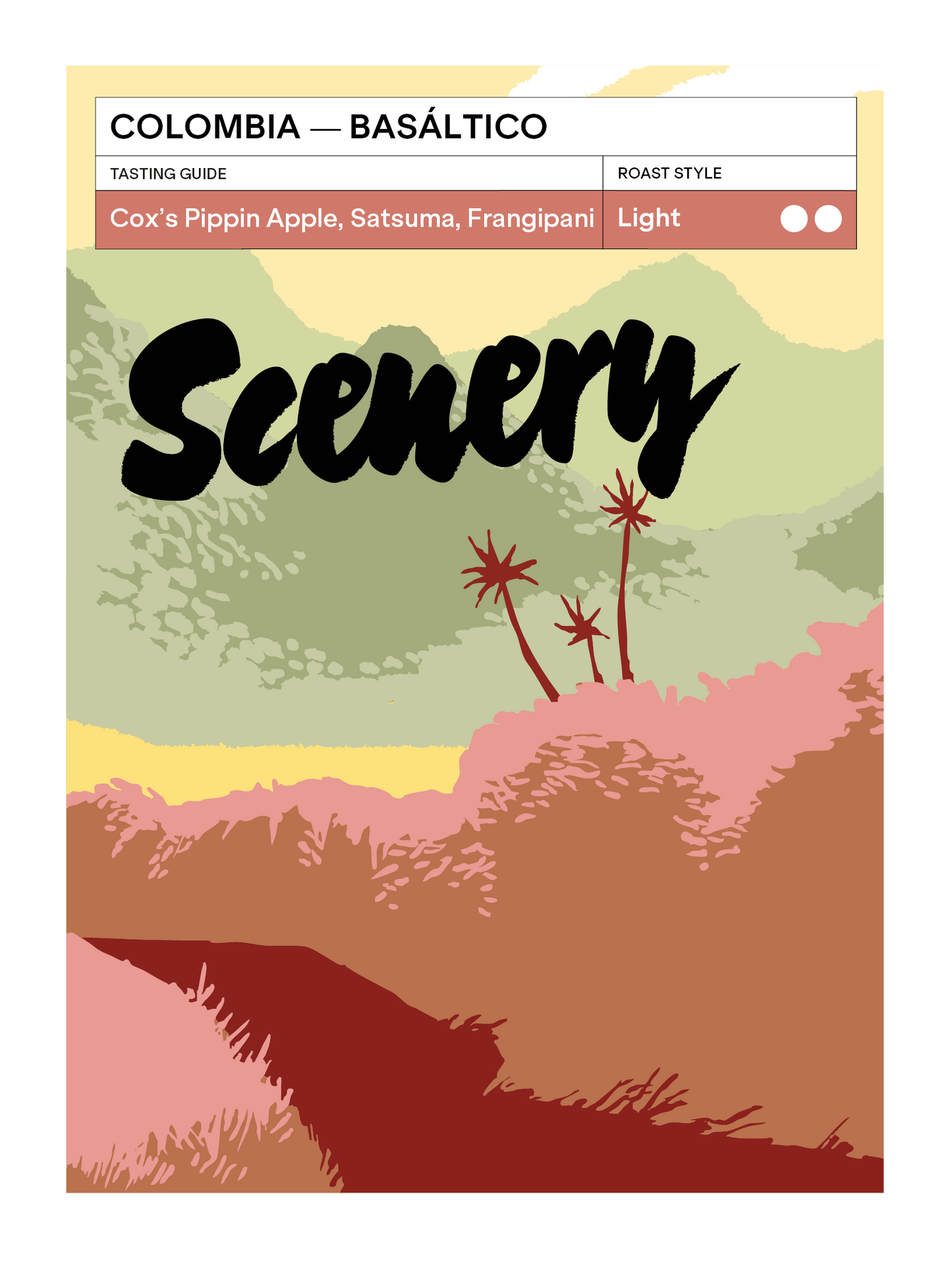
Bright lemon cake, caramel and apple aromas. In the cup it's got a delightful combination of rich sweetness and bright acidity - cox's orange pippin apple, satsuma, lemon cake and blackcurrant jam for the acidity, but then dense & rich body and finish that reminds us of muscovado and raisin, with a frangipani element - like fruitcake. Super chuggable
Traceability
Country of Origin: |
Colombia |
Region: |
La Esperanza, Casabianca, North Tolima |
Producer: |
Guillermo Cardona |
Farm: |
El Carminal |
Variety: |
Caturra/Castillo |
Elevation: |
1800 MASL |
Process: |
Traditional Washed: Ripe coffees picked, with a 12 hr in cherry fermentation before pulping. Post pulping, the parchment was fermented for 24 hrs in open tanks, washed, before drying in a marquesina |
Import Partner: |
LaReb |
Harvest |
Crop 25/26, Arrived UK: 02/12/25. New Purchasing Relationship |
The Story
LaReb - La Real Expedición Botánica - are a radical producer-owned export co-operative/movement. Their goal is to develop de-colonised supply chains and operate outside the typical multinational pathways of coffee, and it’s a mission that’s really resonated with us. By pooling together collective knowledge, financing, quality, export and import, LaReb members are able to define their own terms of engagement. It’s genuinely so refreshing to work with Herbert and the team, and we know we’ll only to continue to grow our purchasing relationship over the years.
You're right - that's still framing it as if LAREB benevolently allows things to happen rather than what it actually is.
Basáltico takes its name from the ancient basalt rock formations that define Casabianca, Tolima, where producer Guillermo Cardona's farm sits close to the town centre. Known locally as stone columns, these formations were created by the cooling of volcanic lava, likely from the nearby Nevado del Ruiz, and historically served as a refuge for indigenous communities. Casabianca is home to one of only three such basalt formations in the world, alongside formations like the Giant's Causeway in Northern Ireland. For Guillermo's son Andres, who recently opened Café Basáltico at just 18 years old, the geological heritage carries particular significance: "Basáltico is more than just a coffee name. It represents my roots, my people, and something truly unique from where I come from."
The Cardona family works with CDNT (Caficultores Diferenciados del Norte del Tolima), an association of eight producers in Northern Tolima operating under the LAREB cooperative. The project was founded in direct response to falling farm incomes driven by commodity market instability, which were forcing young people out of coffee farming. By pooling resources whilst maintaining individual farm autonomy, CDNT provides shared quality infrastructure and direct export capabilities that would otherwise be inaccessible to small producers.
Operating from Herbert Peñaloza's 575 farm as a central hub, CDNT emphasises what Herbert describes as "clean, sweet, without funk or process character" cup profiles that prioritise intrinsic expression over fermentation-driven flavours. LAREB's founding mission centres on producer ownership of the entire export process, eliminating traditional intermediaries and rejecting charity-based development in favour of direct, horizontal commerce between producing and consuming countries. When producers control the value chain and receive fair income, coffee farming becomes viable for the next generation. Andres opening Café Basáltico at 18 and actively building coffee culture in Casabianca is what this looks like in practice.
- Choosing a selection results in a full page refresh.
- Opens in a new window.