


![Colombia - Villamaría Natural Decaf [25/26]](http://scenery.coffee/cdn/shop/files/colombia_villamaria_decaf_2526_shopify.png?v=1768578400&width=1445)
![Colombia - Villamaría Natural Decaf [25/26]](http://scenery.coffee/cdn/shop/files/RawMaterialColombiaNovember2018-213.jpg?v=1768578400&width=1445)
![Colombia - Villamaría Natural Decaf [25/26]](http://scenery.coffee/cdn/shop/files/DSC03605.jpg?v=1768578400&width=1445)
![Colombia - Villamaría Natural Decaf [25/26]](http://scenery.coffee/cdn/shop/files/DSC02154.jpg?v=1768578400&width=1445)

Brew Guide:
Best Brewed with: Espresso, Moka Pot, French Press
Medium-Heavy Roaster Influence:
Roasted for solubility & balanced acidity (E.A. decaf can be intensely tropical!) and texture.
Best rested: 1-2 weeks
For Filter: We recommend a ratio of 65g/L and 90°C water
For Espresso: 18g in, 40g out, 28-32s for a classic style of espresso.
We're tasting:
Aromas of sour cherry, malt syrup and chocolate brownie. In the cup we get poached pear, medjool dates and milk chocolate, with that classic pineapple acidity common to the Colombian E.A decaf process. Overall super rich and sweet with a long toffee finish
In milk: chocolate tiffin.
Please note - due to the nature of the physiochemical changes undergone during the decaffeination, this coffee will visually appear to be a darker roast than its actual “perceived” roast degree
Traceability:
The Story:
We've worked with Raw Material for several years now, their "maximum impact coffee" philosophy aligns with our sourcing program intentions. They operate as a Community Interest Company, returning 100% of profits to producers whilst building processing infrastructure and providing training that serves entire communities..
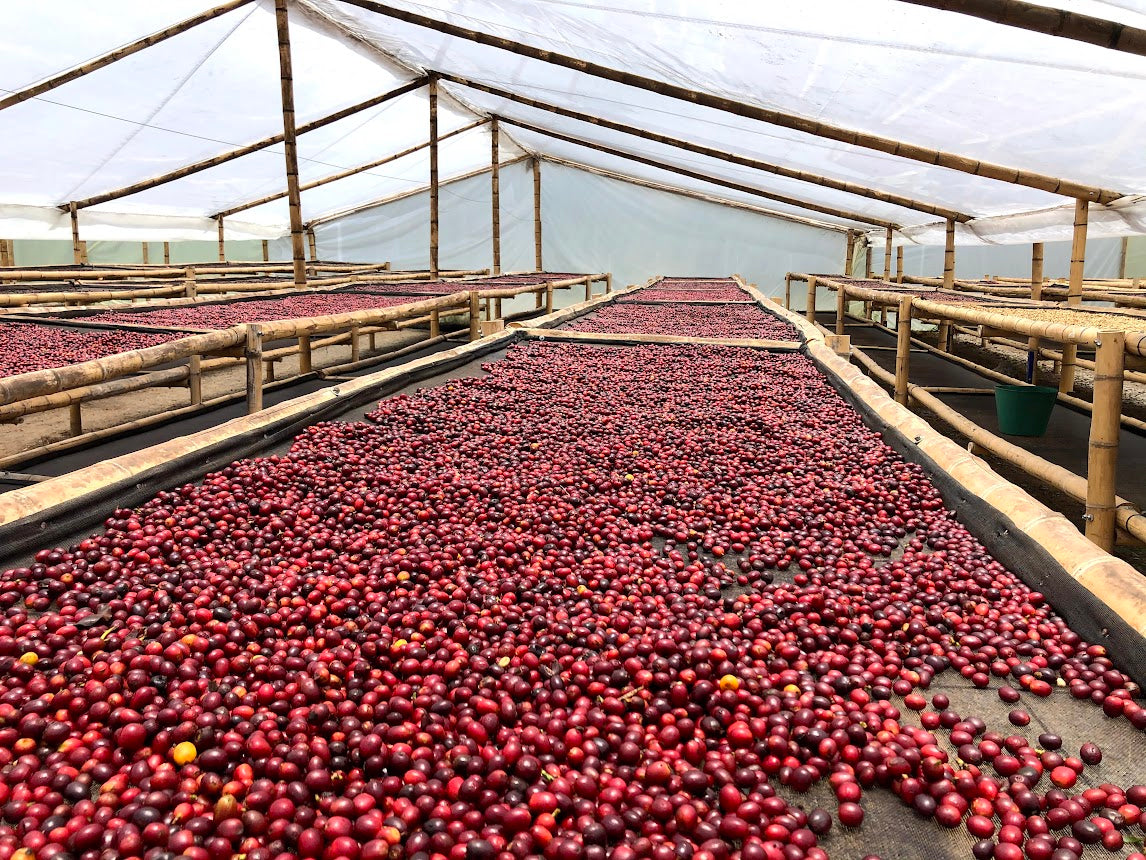
These producers sell cherries to the station for onwards processing, including using value-addition steps such as anoxic protocols, allowing Raw Material to create large volumes of these coffees with consistent quality, and returning a higher premium to the producers involved in the project. It's this production at scale that allows Raw Material to create the volumes required for decaffeination, as there is a minimum size of 60 bags of raw coffee for the process to occur.
After processing and drying, the coffee is milled and travels to Descafecol in Manizales for in-country decaffeination using ethyl acetate derived as a natural by-product of sugarcane fermentation. The EA process steams coffee to open cellular pores in the green coffee before extraction over 8 hours using the ethyl acetate to selectively remove caffeine, preserving over 95% of original volatile compounds whilst achieving 97-98% caffeine removal.
Descafecol currently operates at approximately 75% capacity, creating significant bottlenecks as speciality decaf demand increases, which is why we've seen (and have purchased) increasingly large amounts of coffee decaffeinated using the same process in Germany. We've booked out 6 months of supply from the producers at Villamaría over 2 lots, continuing our purchasing relationship.
- Choosing a selection results in a full page refresh.
- Opens in a new window.