


Brew Guide:
Best Brewed with: Filter
Lightest Roaster Influence: We have been consistently impressed with the florality, sweetness and juicy acids present in this coffee, so we've been chasing that absolute peak of those elements that we can. A touch longer dev as befits a trad washed lot compared to higher intervention, but still a ripping fast profile
Best Rested: 5+ Weeks
Filter: 62g/L, 96°C when fresh, but with rest can go down to 92°C
Espresso: 18g/50g/18s+ Turbo/Soup style best, with good rest can pull a more classic wide shot
We're tasting: Super nice aromatics - we find apricot yoghurt and orange zest. In the cup it's bright and super vibrant, with green apple, yuzu, mandarin, and milky earl grey as the prominent notes alongside ripe mango and chamomile. As it cools the florals become more prominent, with orange blossom and lilac, and we find a little hint of granadilla. Really Ethiopian like
Traceability
Country of Origin: |
Colombia |
Region: |
Vereda Sinaí, Palestina, Huila |
Producer: |
Yulieth Mora Ortega |
Farm: |
Villa Pastora |
Variety: |
Ají |
Elevation: |
1680 MASL |
Process: |
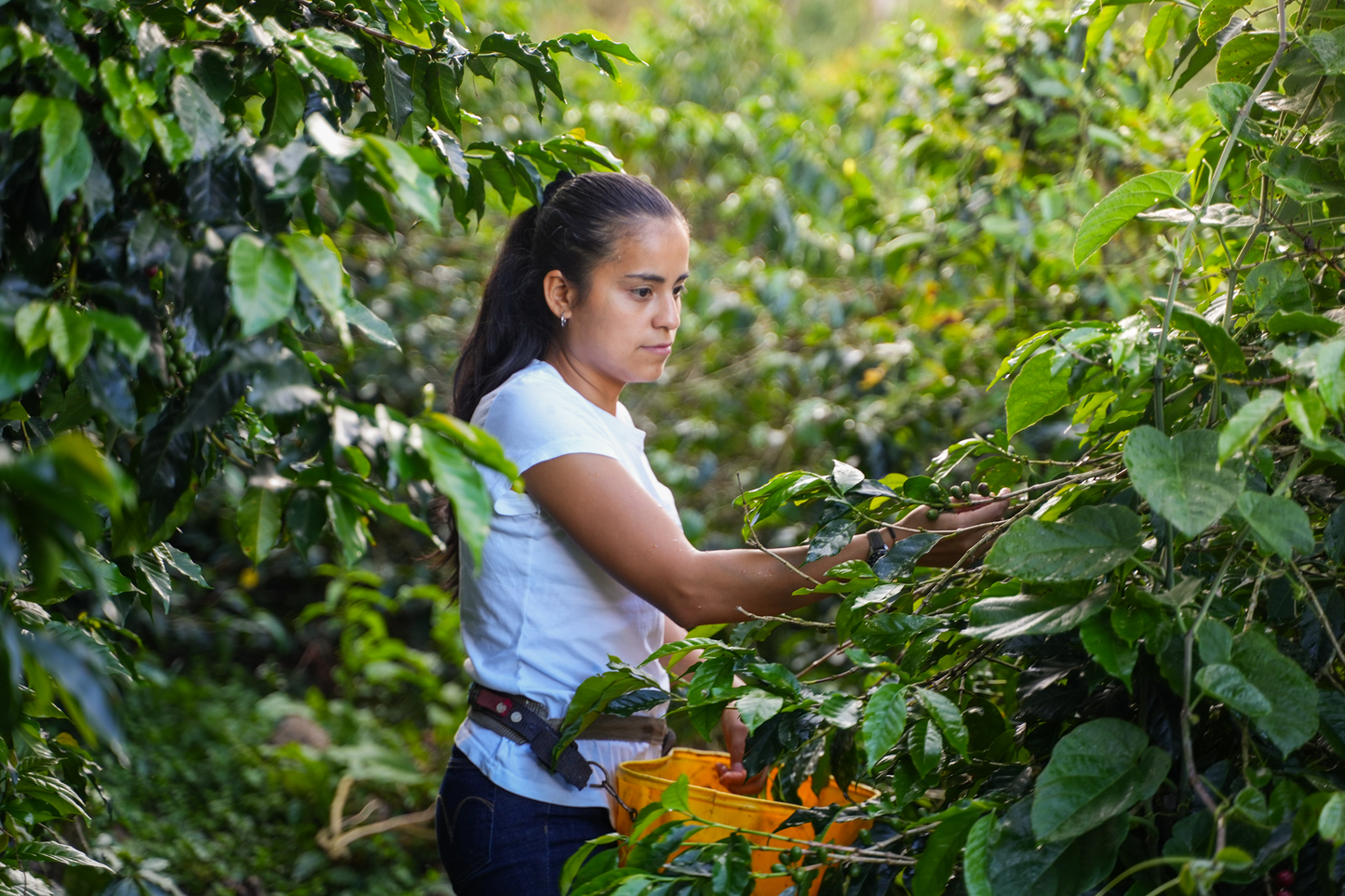
Traditional Washed: Ripe cherries are handpicked and passed through a flotation system to remove low-density and defective beans. Cherries are then de-pulped and fermented in an open tank for 30 hours. Coffee is moved to the drying shed and dried over 15 days |
Import Partner: |
Primavera |
Harvest: |
Fly Crop 25/26 - Arrived UK: End of March 2026. Second Harvest purchasing from Yulieth |
The Story
Villa Pastora:
Finca Villa Pastora sits in one of our favourite microregions in Huila - Palestina. A small farm of roughly eight hectares, their coffees grow under cedar, bamboo, and rubber trees shade trees, managed as a low-input approach without agrichemicals. Not certified organic, but following similar practices and towards a more regenerative style of agriculture, something we're big fans of. The farm employs around eight full-time workers from the surrounding area.
Pastora Anacona acquired the land in the 1980s and planted its first Typica, managing the farm until 2002 when her son Álvaro Arley Mora Anacona took over and began expanding the operation towards differentiated speciality production.
Yulieth and her brother Gerson are the third generation to work the land, and what was once a conventional Typica farm now cultivates Caturra, Tabí, Colombia, Rosado, Gesha, Orange Bourbon, Bourbon Rayado, and Ombligon. With that cultivar diversification has come investment in processing infrastructure and fermentation knowledge, and the family now also purchases cherry from neighbouring smallholders to process on-site. Cherry purchasing for heavy ferments is something we have mixed feelings on - on the one hand, if the prices paid for wet cherry are good, and the producers would not otherwise have the ability to access speciality markets or some of the premiums paid for lots like this, it's broadly a good thing (like for example in countries like Rwanda or Ethiopia where producers could not be expected to have the resources to process on site or the farm sizes do not support it).
On the flipside, if producers are able to process and dry their own coffee, it's the best way for them to retain value - but not everyone has the knowledge, equipment and ability to take the risk on higher intervention lots, and getting it wrong can mean effectively throwing away your crop and your money, as badly fermented lots are not able to be sold to commercial buyers (who want clean, non-fruity cups without "unwashed" flavours). Like we said, mixed feelings - so long as the wet cherry price is good, we're broadly on board with it.
Ají:
Ají is an Ethiopian landrace accession, not the Bourbon derivative its name ("Bourbon Ají") once implied. We've done a bigger writeup on the history of this variety with our last Ají release- but suffice to say, we really taste the Ethiopian roots for this coffee, as this is one of the most floral Ají's we've had the pleasure of cupping yet.
- Choosing a selection results in a full page refresh.
- Opens in a new window.