


Brew Guide:
Best Brewed with: Filter
Lightest Roaster Influence: This lot was pretty low moisture so it's got incredibly low weight loss, however we think it's been part of the reason for its longevity. Because of the low moisture, it's required very little gas to get a nice snappy roast, and while the test roast was very sweet and structured we gave it a touch more development to up the intensity, and we think it's singing now.
Best Rested: 4+ weeks
Filter: 62g/L, 94°C when fresh; 92°C when rested
Espresso: 18g/45g/24-28s
We're tasting: Intense white florals (reminding us of wild privet blossoms) and honeydew melon on the aroma. In the cup it’s super juicy - we’re getting wild/alpine strawberry, yellow dragon fruit and physalis, in an excellent example of the Sidra variety. As it cools that classic variety character comes out in the form of a sweet/savoury note - like cuore del vesuvio tomato & a hint of basil. Super nice - this’d be a banger iced
Traceability
Country of Origin: |
Ecuador |
Region: |
Tulipe, Pichincha |
Producer: |
Julio Ullauri |
Farm: |
El Rocío |
Variety: |
Sidra |
Elevation: |
1600 - 1800 MASL |
Process: |
Anoxic Washed: Ripe cherries laid under direct sunlight to dehydrate/oxidise and achieve a higher Brix degree before pulping. Cherries are then pulped and undergo fermentation for 72 hours in a sealed anoxic environment. Parchment is fully washed and laid to dry on raised African beds. Drying is managed using dehumidifiers inside polytunnels at night, with coffee moved outside during the day to manage the intense cloud-forest humidity of the Tulipe microclimate. |
Import Partner: |
Makicuna via Algrano |
Harvest: |
Crop 25/26 - Arrived UK: April 2026. New Purchasing Relationship |
The Story
Finca El Rocío sits in Tulipe, in the north-western highlands of Pichincha, within Ecuador’s Chocó Andino biosphere reserve (a UNESCO recognised region, with over 3000 plant species recognised). This is peak cloud-forest country where the Andes meet moist Pacific air, and the resulting humidity, mineral-rich volcanic soils and wide daily temperature swings leads to an incredibly bio-diverse growing environment.
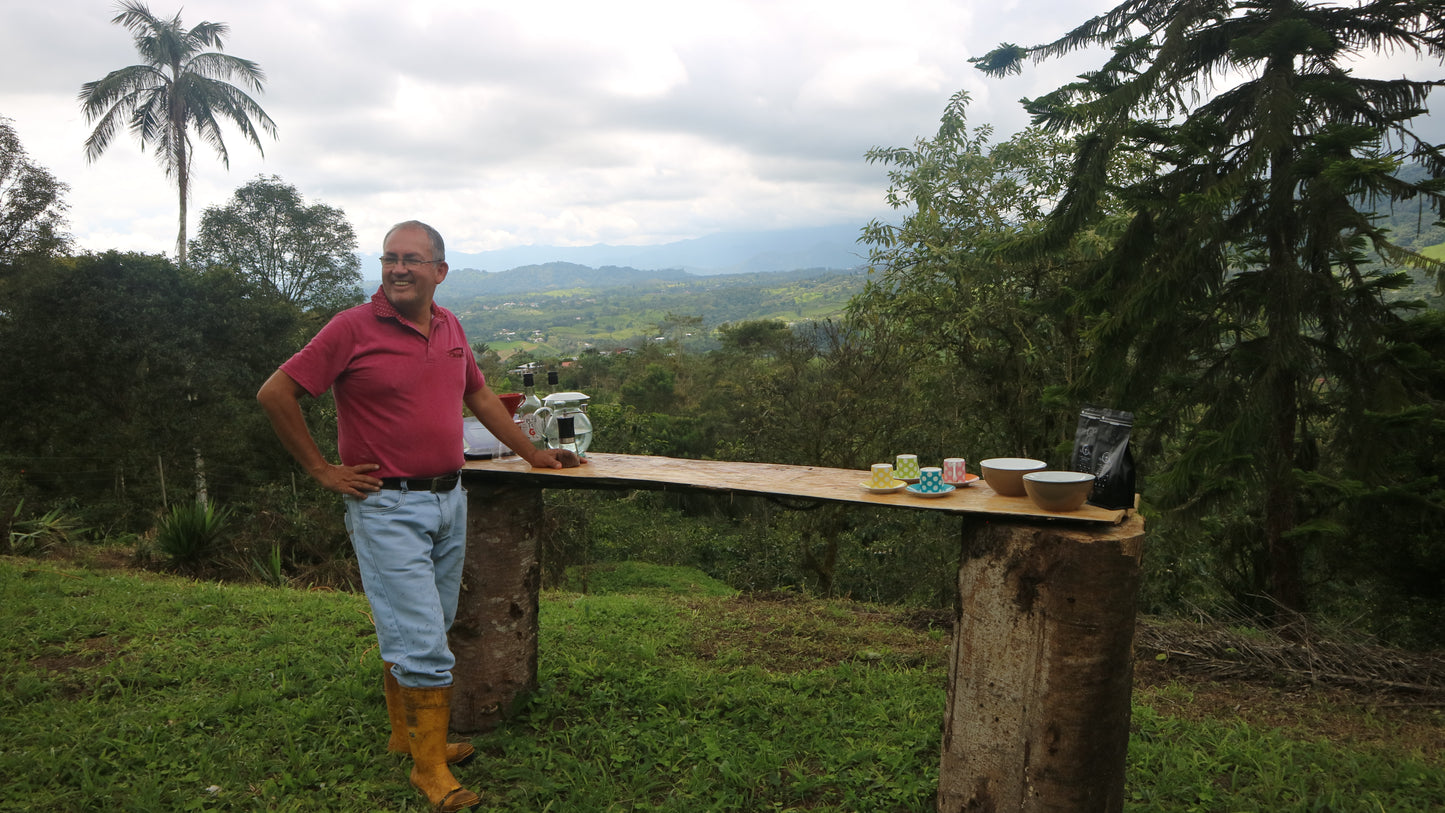
Julio Ullauri is a former aeronautical engineer who spent over twenty years in the Ecuadorian armed forces before turning to coffee, taking on El Rocío in 2013 and producing his first crop in 2015. He’s taken an engineers mindset to the work on the farm, both in the cultivation and processing/drying- and it shows. Meticulous and precise, he's doing excellent work and we're looking forward to receiving new harvest samples. Much like the Megadu "static cherry" - Julio has pre-dried the cherries for a day, oxidising them, prior to the processing, and it's really nicely done - we're impressed with how sweet we find this coffee without a hint of any heavy funky note, and it doesn't have any of the Sidra onion note that can oft hit this cultivar.
Sidra, of course, is one of the varieties that put Ecuador on the map. An Ethiopian landrace variety that was used in a breeding program at a Nestle agronomical research station (now shuttered), it was identified for its potential for speciality production and smuggled from the station by Don Olger Rogel, a technician who worked there, alongside the seeds for Mejorado (née Typica Mejorado) and Fragancia. Sidra - when it hits - is exceptional, super nice florals, apples, a soft and plush herbality that often reminds us of chamomile tea and just very very sweet. They can swing more or less herbal - sometimes spicy, menthol resinous, gingery, or when you hit a "bad" one it's a little like green onion. Our word as our bond, we think this is a cracker
- Choosing a selection results in a full page refresh.
- Opens in a new window.