


Brew Guide:
Filter: 62g/L, 94°C when fresh; 92°C when rested
Espresso: 18g/45g/24-28s
We're tasting: Absolutely classic washed Guji characteristics - punchy florals and citrus on the nose. In the cup we're finding navel orange, jasmine green tea, guava soda and lemongrass hot. As it cools becoming more peachy, with great acidity and a distinct lemon-lime fizzy soda note.
Traceability
Country of Origin: |
Ethiopia |
Region: |
Banko Michicha kebele, Guji |
Producer: |
Banchiyayehu Geremew |
Farm: |
Banchi's washing station |
Variety: |
JARC 74110, Local Landraces |
Elevation: |
2050 MASL |
Process: |
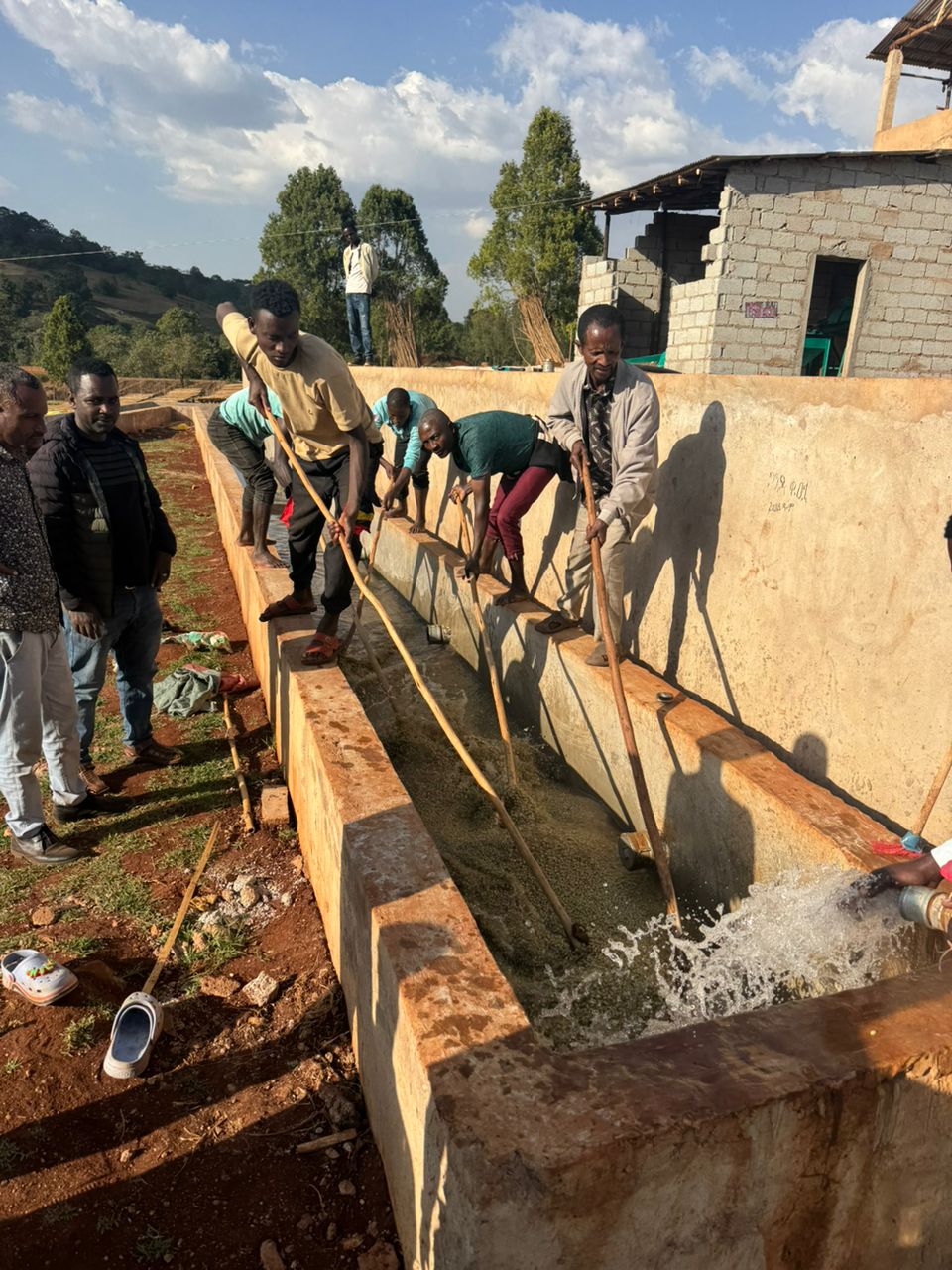
Traditional Washed: Cherry pulped and submerged in a fermentation tank for 48 hours. Remaining mucilage then removed and the coffee drained before being spread over raised drying beds for 12 days. The coffee is then moved to the warehouse and allowed to condition in a pile for 7 days before bagging and transport to Dukem Getachew's dry mill. |
Import Partner: |
Omwani |
Harvest: |
Crop 25/26, Dec 25 - Jan 26 Harvest. Arrived UK 11/09/2026. New Purchasing Relationship |
The Story
It is often not touched upon - and structures like this are very common for many coffee growing countries - that women do most of the work in Ethiopian coffee, from raising seedlings to picking and sorting. Yet the ownership of land and processing infrastructure, and with it control over income, sits overwhelmingly with men. Among the Guji Oromo, social organisation follows the Gadaa system (an overwhelmingly patriarchal system of governance), and women’s formal authority follows Siiqqee institution - a powerful social counterforce of woman led mutual aid that offers a check and balance to the male dominance of systems of authority and power, but does not come with equal privileges when it comes to leadership positions - even in the case of widowhood, it is customary for re-marriage to a relative of the husband rather than inheritance of the male property.
A washing station is a capital-intensive, licensed business that has to buy cherry in cash at harvest, manage labour and water, and hold stock until it is sold. That is why we're so stoked to purchase and celebrate this lot from Banchiyayehu Geremew, who - notably - owns her own washing station in Banko Michicha. She has her own farm as well as purchasing cherries from neighbouring outgrowers for onwards processing.
Until 2017 the Ethiopian Commodity Exchange (ECX) historically stripped coffee of its provenance, mixing lots together and making farm-level traceability impossible. You'd need to buy co-op level lots, and the exporters would work the system to figure out the appropriate lot codes on the auction to "complete" the traceability chain. But that 2017 rule change shook that up - allowing direct exports if the producer/farm/station was partnered with a dry mill. The reality is that the majority of Ethiopian smallholders still lack the infrastructure to maintain lot separation from cherry to export, but those with slightly larger farms or resources (or exporters with excellent ground game, traceability and ability to keep lots separate) are capable of taking advantage of this.
Mecota Trading is one of those exporters, whose USP has been built almost entirely off the back of some incredible smallholder producers. Moata Raya and his wife Rosa founded it in 2023, after Moata spent many years in the south working on high quality coffees, including with TechnoServe (the NGO who helped support the processing and quality of many of the co-ops who were top of the game when it came to quality in the ECX era - think Duromina, Biftu Gudina, etc). Mecota has gathered a roster of excellent, quality minded private producers with farms that produce lots large enough (including purchasing cherry from neighbours to process on site, something you can take as a given for every Ethiopian single producer lot) to export in their own right, while keeping each coffee linked to the people who grew and processed it.
Banko Michicha kebele sits in Kercha woreda, now part of the West Guji zone. Coffee from this area was historically sold as "Sidamo" before Guji became recognised as a notable region in its own right. Quite by accident we've rapidly come to find Guji being one of our favourite and most featured origins from Ethiopia - without focusing on it intentionally, it's come to represent a significant majority of the lots we feature each year.
Coffee here is grown on small garden and semi-forest plots alongside other crops. Perhaps one reason we heavily feature Guji is that there is a higher concentration of smallholders who own larger farms - making them more likely to be separated as single producer lots, and the extra income from these larger plots can also be more easily deployed towards improvements on the farm (when compared to the typical garden coffee/tiny plots we see in many smallholder farmers).
In more established areas, old trees of local landraces are typically mixed with newer plantings Jimma Agricultural Research Centre selections such as 74110, which was developed in the 1970s for resistance to coffee berry disease and is now widely grown across the south (74 refers to the year the trees were sampled from wild coffee in the Metu Bishari forest, and 110 in this case refers to the specific line that was selected for onwards distribution). In higher altitude/newer areas, it tends to be just JARC lines that are planted.
Producing washed coffee was a significant undertaking and risk for any producer or station manager in the 25/26 crop (for the speciality focused regions in the south). Exceptionally high cherry prices and export prices, with a down-cycle crop - yet without finance rising to meet those same rises - meant it was a significant investment to purchase cherry and process, when washed lots typically export for lower prices than naturals. Many farmers chose to try and take advantage of the high prices by drying their own cherries as naturals rather than selling them on wet to stations, constricting supplies further - so if you ran a station, you had to either have a pre-commitment for washed coffees that needed to be produced or be utterly determined to produce them.
- Choosing a selection results in a full page refresh.
- Opens in a new window.