


Brew Guide:
Best Brewed with: Filter and Espresso
Light Roaster Influence: We initially profiled this coffee with a touch extra development for a subscription box; but then actually we really liked how a touch more development highlighted a more intense citric & stone fruit acidity. So still quite a fast and snappy roast; but with a touch longer dev and smidge hotter end temp.
Best Rested: 4+ weeks
Filter: 62g/L, 94°C when fresh; 92°C when rested
Espresso: 18g/50g/24-28s
We're tasting: Really classic Guji washed profile - orange blossom, black tea and lemongrass aromatics. In the cup it's super sweet and thick bodied, we're finding lemon curd and pastry notes that remind of us lemon meringue pie, with lower perceived acidity while hot and some peachy stonefruit notes. The sweetness is akin to black tea with white sugar, and as it cools we find more florality and acids become apparent - like elderflower cordial with lemon,
Traceability
Country of Origin: |
Ethiopia |
Region: |
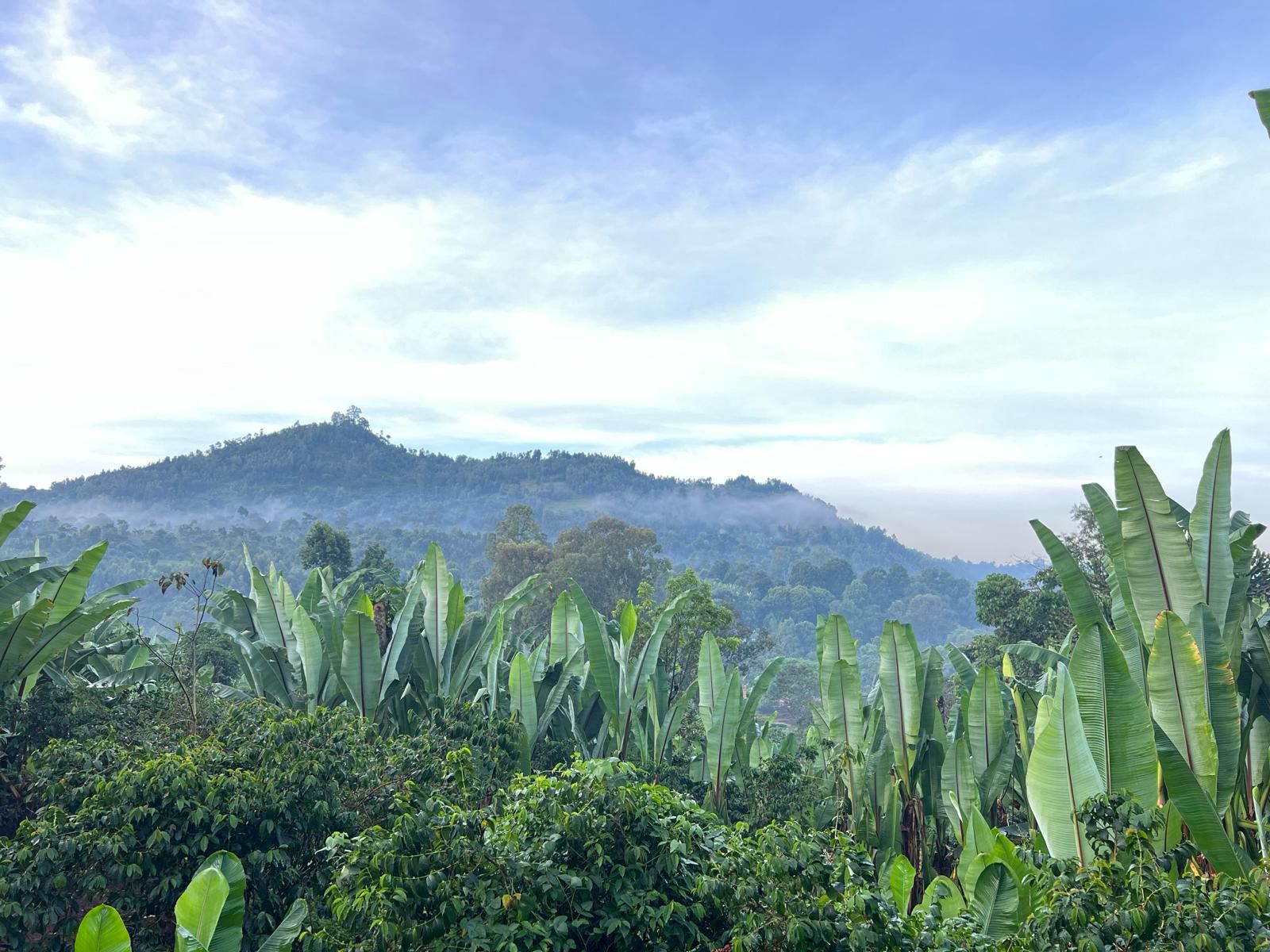
Megadu, Shakisso Woreda, Guji |
Producer: |
Hassan Ware |
Farm: |
Hassan-Megadu |
Variety: |
JARC 74112/74158 |
Elevation: |
2000 - 2200 MASL |
Process: |
Traditional Washed: Ripe cherries selectively picked and delivered to Hassan's own wet mill in the evening, held briefly in bags before depulping the following morning. Fermented in concrete basins for 24-36 hrs, topped with water throughout. Washed and then dried on raised beds. |
Import Partner: |
Bette Buna (facilitated via Falcon) |
Harvest: |
Crop 25/26 - Arrived UK: July 2026. First year purchasing Hassan Ware as a single-farmer separation (previously part of the Megadu Community lot). |
The Story
The Ethiopian Commodity Exchange was established in 2008 as the mandatory trading mechanism for the country's coffee, with the exception of cooperatives and larger plantations. Coffee sold through the exchange was pooled and sorted by grade and region rather than by farm or washing station, and lots were blended together at warehouse level, meaning traceability back to an individual producer was not possible for the vast majority of Ethiopian coffee - with the majority of traceable coffees being on the co-op and washing station level, often by "following codes" through the process, a system that was fraught with risk.
This began to change with the Coffee Marketing and Quality Control Proclamation of 2017, along with its 2018 implementing regulation which allowed any producer or supplier capable of processing coffee into green beans to trade and export outside the exchange. Further directives in 2019 formalised what is generally referred to as vertical integration, permitting smallholders above a certain landholding, along with larger commercial farms, to export directly. It's this exact regulatory shift that makes a traceable single farmer lot like Hassan's possible at all. Bette Buna's vertically integrated structure (which includes its own wet mills and export channel) is what allows that traceability to be maintained from Hassan's wet mill in Megadu through to export.
The 25/26 crop year followed the liberalisation of the Ethiopian birr in 2024 and an Ethiopian government keen to chase the higher prices promised by the volatile C price spikes it missed out on from the 24/25 crop, which led to cherry prices ring substantially and staying high for the duration of the harvest, on top of a down year in the southwestern regions with limited volumes.
Washed processing requires considerably more upfront capital than drying cherry at home, as it involves purchasing large volumes of fresh cherry before any return is seen, and a number of smallholders and washing stations responded to the price environment by shifting toward naturals and higher value special preps, anoxic and extended fermentations among them (or if they were not able to do this, then many of them did not open for lack of finance), both of which required less immediate outlay and commanded a premium.
The practical effect was a season in which washed processing, historically the standard for Guji, was comparatively uncommon at origin, and we really wanted to make sure we were able to secure some while we were out. Hassan's lot was notable to us as a fully washed coffee produced via traditional processing, at a point in the season where the prevailing economics were pushing most producers toward drier, higher intervention methods instead. Because of the larger farm size (more common for this area of Guji), Hassan did not need to purchase cherry himself - it came from his 75 HA farm, which is relatively newly planted with coffee and mostly growing JARC Varieties.
Hester says that they have worked with Hassan for many years now and vouch for him being a great guy, and any friend of Bette Bunas is a friend of ours too - we're stoked to feature his coffee and to have this excellent representation of the Guji FW profile on the offer.
Bette Buna:
The first Bette Buna (“House of Coffee”) farm was founded in 2019, after Dawit inherited his grandfather’s coffee farm in Sidama. Dawit’s grandfather was a respected community leader, and with that in mind Hester and Dawit set out to create a sustainable, community led future for coffee farming in Ethiopia. They intend to achieve this by producing higher quality coffees, with collaboration and community development intimately linked to this. The funds from fair pricing and export help pay for community education and increased living standards, with living incomes a pillar of the Bette Buna mission.
Dawit and Hester have been purchasing the farms immediately abutting the Taferi Kela farm, adopting a high standard for purchasing (a minimum price for the land, alongside paying out 2 years of future production profits for the land at the point of sale), alongside offering the farmers employment at Taferi Kela.
By acting as a vertically integrated supply chain and increasing the export value of the centrally processed coffees, this both increases the income of the farmers turned employees beyond what selling their cherry to a station might have done, and socialises the profits whilst removing personal risk. Bette Buna have also established a nursery at Taferi Kela, distributing both improved JARC cultivars (higher yielding and more disease resistant) as well as shade trees and staple food crops, providing stable and consistent year round employment to the local community.
The impact of this nursery in terms of livelihood for subsistence farming cannot be understated, and the return to agro-forestry by increased shade tree planting is a positive move on a warming planet, and the distribution is directly tied to agronomic training workshops that help further increase yield and quality (and income) to boot. The work to establish more shade trees is hand-in-hand with a rewilding project to increase the native forest cover in the immediate area around Taferi Kela, and we expect to see this region increasingly start to get prestige off the back of their work.
Dawit and Hester’s second farm (the farm this lot hails from) is located in Guji, a region that has become famed for the particular quality of the natural process coffees produced here. Coffees from Guji are deeply fruity and berrylike, something we particularly enjoyed as a contrast when compared to the tarter citrus and white flower cups that you might find in Yirgacheffe or Sidama coffees.
The provenance of Ethiopian coffee regions is really not unlike that of the different wine regions in France - particular combinations of altitude, microclimate and the local predominance of local landraces vs locally improved cultivar plantings (akin in effect to the different varieties of grapes you might find in the wine regions) shift the cup profile. Fruit flavours are a real highlight of Ethiopian coffee - from the lower grade lots that intermingle with chocolate and spice notes, to the highest grades that are so outrageously sweet, bright and floral that prior to high technical intervention coffee used to be the main gateway into discovering speciality coffee. We think that Ethiopia is such an under-valued origin - the same cup profile from a high altitude farm in Central or South America would command a hefty premium.
The Megadu farm in Guji is over 220 HA, lead by 3 community leaders (Abbaa Gadaa). Of this 220 HA, Bette Buna manages a quarter, acting as a pilot project for many of the community lead initiatives Hester and Dawit run. The processing station, located centrally in the farm, allows high value return processing (such as anoxic fermentation and extended ferments) alongside well executed classic processing, and crucially drying. Both farms produce their own coffee for production, but also purchase cherry from local smallholders for onwards processing.
- Choosing a selection results in a full page refresh.
- Opens in a new window.