



![Ethiopia - Megadu "Static Cherry" Anoxic Natural [25/26]](http://scenery.coffee/cdn/shop/files/ethiopia_megadu_static_cherry_shopify.png?v=1778853314&width=1445)
![Ethiopia - Megadu "Static Cherry" Anoxic Natural [25/26]](http://scenery.coffee/cdn/shop/files/PXL_20251208_130622099.jpg?v=1778604580&width=1445)
![Ethiopia - Megadu "Static Cherry" Anoxic Natural [25/26]](http://scenery.coffee/cdn/shop/files/PXL_20251205_122350455.jpg?v=1778604580&width=1445)
![Ethiopia - Megadu "Static Cherry" Anoxic Natural [25/26]](http://scenery.coffee/cdn/shop/files/PXL_20251119_111409334.MP.jpg?v=1778604580&width=1445)
![Ethiopia - Megadu "Static Cherry" Anoxic Natural [25/26]](http://scenery.coffee/cdn/shop/files/PXL_20251117_124005889.MP.jpg?v=1778604581&width=1445)
![Ethiopia - Megadu "Static Cherry" Anoxic Natural [25/26]](http://scenery.coffee/cdn/shop/files/PXL_20251116_115035994.MP.jpg?v=1778604581&width=1445)
![Ethiopia - Megadu "Static Cherry" Anoxic Natural [25/26]](http://scenery.coffee/cdn/shop/files/PXL_20251115_090758798.PORTRAIT.jpg?v=1778604580&width=1445)
![Ethiopia - Megadu "Static Cherry" Anoxic Natural [25/26]](http://scenery.coffee/cdn/shop/files/PXL_20251115_070804988.jpg?v=1778604580&width=1445)
![Ethiopia - Megadu "Static Cherry" Anoxic Natural [25/26]](http://scenery.coffee/cdn/shop/files/WhatsAppImage2024-07-04at10.46.56AM.jpg?v=1756459255&width=1445)
![Ethiopia - Megadu "Static Cherry" Anoxic Natural [25/26]](http://scenery.coffee/cdn/shop/files/WhatsAppImage2024-07-04at10.46.55AM.jpg?v=1756459255&width=1445)
Brew Guide:
Best Brewed with: Filter/Espresso
Lightest Roaster Influence: Super dense and well sorted, we're hammering this one with heat up front but tamping it down towards the end of the roast to respect the process-level funk, we experimented with this coffee - finding we can tip it a little more towards boozy blueberries with a heavier hand, and more delicate florals and tropical fruits by backing off. We've alighted very close to the lightest test roast as our desired reference
Best Rested: 3-4+ weeks
Filter: 62g/L, 96°C when fresh but when well rested you can go down to 91-92°C
Espresso: 18g/48g/18-22s. Excellent soup/turbo
We’re tasting: Big blueberry, strawberry, and pineapple aromatics - in the cup we're finding blueberry danish (cooked blueberry, buttery pastry and creamy lactic notes), dried pineapple and a white chocolate sweetness, with a prominent marmalade note in the finish while hot. As it cools becoming a little more process forward - the acidity and aromatics reminding us of orange gewürztraminer wine, with coriander seed, lemon oils & a lavender + geranium florality in the finish.
Traceability
Country of Origin: |
Ethiopia |
Region: |
Megadu, Shakisso Woreda, Guji |
Producer: |
Dawit & Hester Syoum-Westerveld |
Station: |
Bette Buna Megadu |
Variety: |
Wild Guji Megadu (a local landrace), JARC 74112/74158 |
Elevation: |
2000 -2200 MASL |
Process: |
"Static Cherry" Anoxic Natural: Ripe cherries picked and floated, before placing on covered drying beds for a gentle 24 hr "static" pre-dry, oxidising the fruit. The slightly pre-dried cherries are then added to hermetically sealed barrels alongside water and fermented for 96 hrs in anoxic conditions. Post ferment, cherries drained and dried on raised beds with shade control.Coffees milled prior to export in the Guji highlands, with sorting for screen size, density alongside full optical sorting, with a final hand-sort check prior to bagging. |
Import Partner: |
Direct with Bette Buna (facilitated via Falcon) |
Harvest |
Crop 25/26, Arrived UK May 4th 2026
Third harvest purchasing coffee from Bette Buna |
The Story
In many coffee producing countries, the harvest cycle is characterised by up-years and down-years - without consistent agrichemical/organic inputs to feed the trees, a bumper crop is followed by a year of recovery for the trees, their organic matter picked, processed, dried and shipped to become the beverage we all so love.
Having made the commitment to only travel on origin trips when we were buying serious volume - so that we could make the effort of hosting us be duly matched with the buying firepower we could bring to bear - we had always planned that Ethiopia would be one of our first trips out.
It's just so happened that this year has coincided with a down-cycle crop and extremely limited availabilities of coffee, where the best lots went to those who cupped at origin - we wish we could say we planned it like this, but it was a lucky break, we just wanted to come say hey and cup with our key partners. As a result of the trip, we've committed early and secured one of the most exciting slates of coffees we've yet sourced, and we're stoked for the rest of the season.
Having planned this since last year, we also committed early to airfreighting some coffee - selected from the lots we cupped in time for LCF. We want to particularly shout out the work of Micah Sherer from Skylark/Bette Buna and the team at Falcon - we committed early, but they put in the immense legwork to actually move the coffee. It goes without saying a huge effort on the behalf of Bette Buna as well, for which we're all eternally grateful.
We'll write more about the arc of the latest Ethiopian crop cycle over the next few releases as there's a lot to be said about this harvest, and we've run out of time to write before LCF. Luckily with over 20 lots confirmed so far, we'll have time to cover it all ;)
Bette Buna:
The first Bette Buna (“House of Coffee”) farm was founded in 2019, after Dawit inherited his grandfather’s coffee farm in Sidama. Dawit’s grandfather was a respected community leader, and with that in mind Hester and Dawit set out to create a sustainable, community led future for coffee farming in Ethiopia. They intend to achieve this by producing higher quality coffees, with collaboration and community development intimately linked to this. The funds from fair pricing and export help pay for community education and increased living standards, with living incomes a pillar of the Bette Buna mission.
Dawit and Hester have been purchasing the farms immediately abutting the Taferi Kela farm, adopting a high standard for purchasing (a minimum price for the land, alongside paying out 2 years of future production profits for the land at the point of sale), alongside offering the farmers employment at Taferi Kela.
By acting as a vertically integrated supply chain and increasing the export value of the centrally processed coffees, this both increases the income of the farmers turned employees beyond what selling their cherry to a station might have done, and socialises the profits whilst removing personal risk. Bette Buna have also established a nursery at Taferi Kela, distributing both improved JARC cultivars (higher yielding and more disease resistant) as well as shade trees and staple food crops, providing stable and consistent year round employment to the local community.
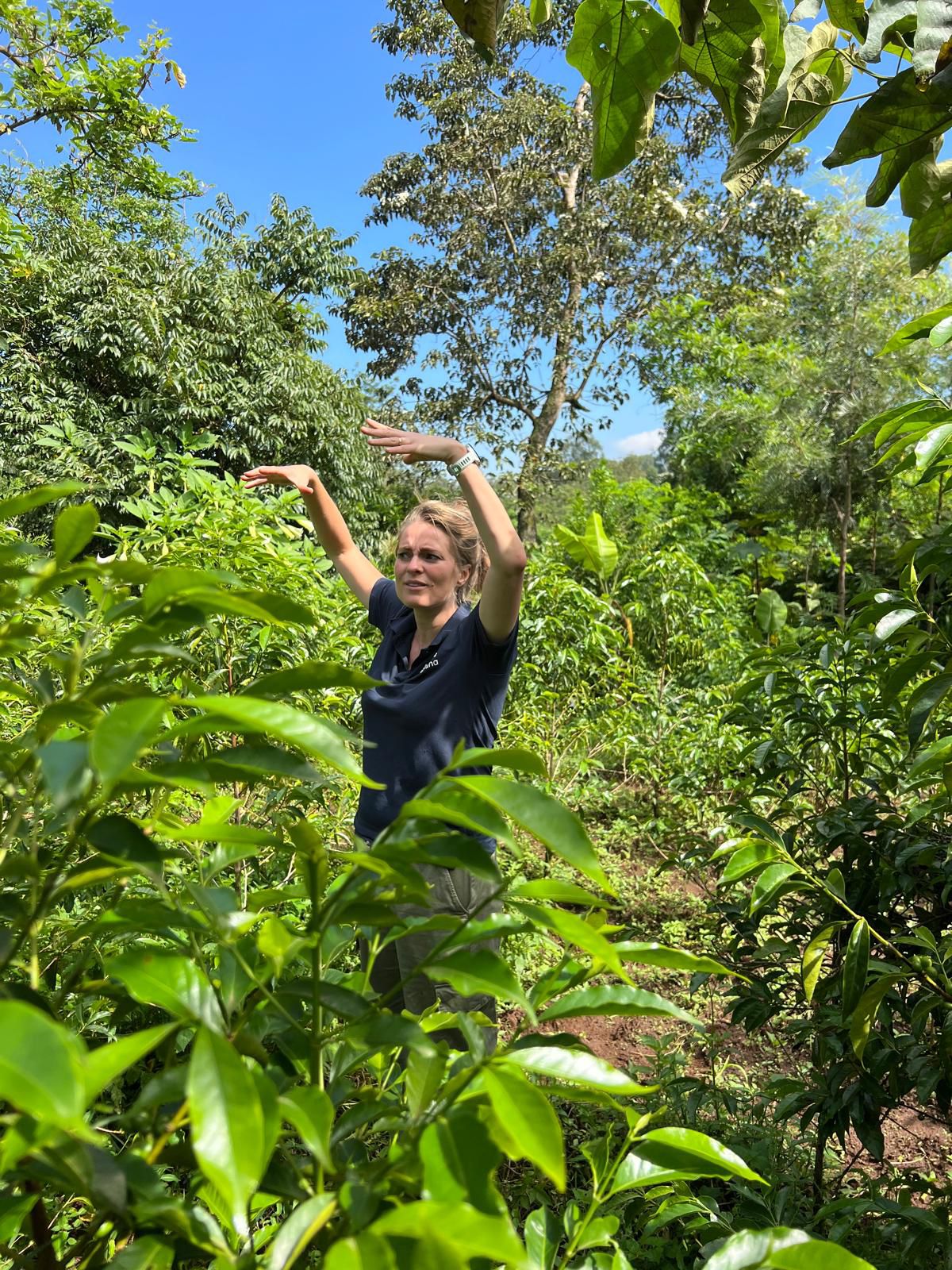
The impact of this nursery in terms of livelihood for subsistence farming cannot be understated, and the return to agro-forestry by increased shade tree planting is a positive move on a warming planet, and the distribution is directly tied to agronomic training workshops that help further increase yield and quality (and income) to boot.
The work to establish more shade trees is hand-in-hand with a rewilding project to increase the native forest cover in the immediate area around Taferi Kela, and we expect to see this region increasingly start to get prestige off the back of their work.
Dawit and Hester’s second farm (the farm this lot hails from) is located in Guji, a region that has become famed for the particular quality of the natural process coffees produced here. Coffees from Guji are deeply fruity and berrylike, something we particularly enjoyed as a contrast when compared to the tarter citrus and white flower cups that you might find in Yirgacheffe or Sidama coffees.
The provenance of Ethiopian coffee regions is really not unlike that of the different wine regions in France - particular combinations of altitude, microclimate and the local predominance of local landraces vs locally improved cultivar plantings (akin in effect to the different varieties of grapes you might find in the wine regions) shift the cup profile. Fruit flavours are a real highlight of Ethiopian coffee - from the lower grade lots that intermingle with chocolate and spice notes, to the highest grades that are so outrageously sweet, bright and floral that prior to high technical intervention coffee used to be the main gateway into discovering speciality coffee. We think that Ethiopia is such an under-valued origin - the same cup profile from a high altitude farm in Central or South America would command a hefty premium.
The Megadu farm in Guji is over 220 HA, lead by 3 community leaders (Abbaa Gadaa). Of this 220 HA, Bette Buna manages a quarter, acting as a pilot project for many of the community lead initiatives Hester and Dawit run. The processing station, located centrally in the farm, allows high value return processing (such as anoxic fermentation and extended ferments) alongside well executed classic processing, and crucially drying. Both farms produce their own coffee for production, but also purchase cherry from local smallholders for onwards processing.
- Choosing a selection results in a full page refresh.
- Opens in a new window.