


Brew Guide:
Best Brewed with: Filter/Turbo Espresso
Lightest Roaster Influence: This one is an interesting one - we find honey process lots tend to sit somewhere between washed and naturals when it comes to the sort of heat and time they require at the end of the roast, as one might expect, but generally tending to be closer to washed than natural. But then the curveball aspect in this case is something pulling it in two opposite directions - it's an anoxic processed lot, but also a very high density high altitude small screen size coffee. We've ended up splitting the difference - marginally longer overall roasting than our typical Ethiopian lots, slightly longer development time, slightly lower end temperature than we would for a washed lot. Our first test roasts were very, very light but rested out well, so we're tweaking the amount of development to get them to open earlier without adding too much roaster influence and preserve the maximum amount of electric acidity and florals we love in this coffee.
Best Rested: 4+ weeks
Filter: 64g/L, 94°C when fresh; 92°C when rested
Espresso: 18g/50g/18-22s
We're tasting: Sweet aromatics of lemongrass, cantaloupe, and apple blossom. In the cup while hot it's super bright & zippy - we find meyer lemon, granny smith apple, white grape, milk oolong and a hint of lemongrass. As it cools becoming more like kesar mango, slightly underripe crisp concord pear, with the sparkling acids & freshness of young dry riesling wine.
Traceability
Country of Origin: |
Ethiopia |
Region: |
Tima, Odo Shakiso, Guji |
Producer: |
25 smallholder farmers; Ture Waji (Sookoo/Mayole Coffee) |
Station: |
Weessi |
Variety: |
JARC: 74110 & 74112 |
Elevation: |
2000 - 2150 MASL |
Process: |
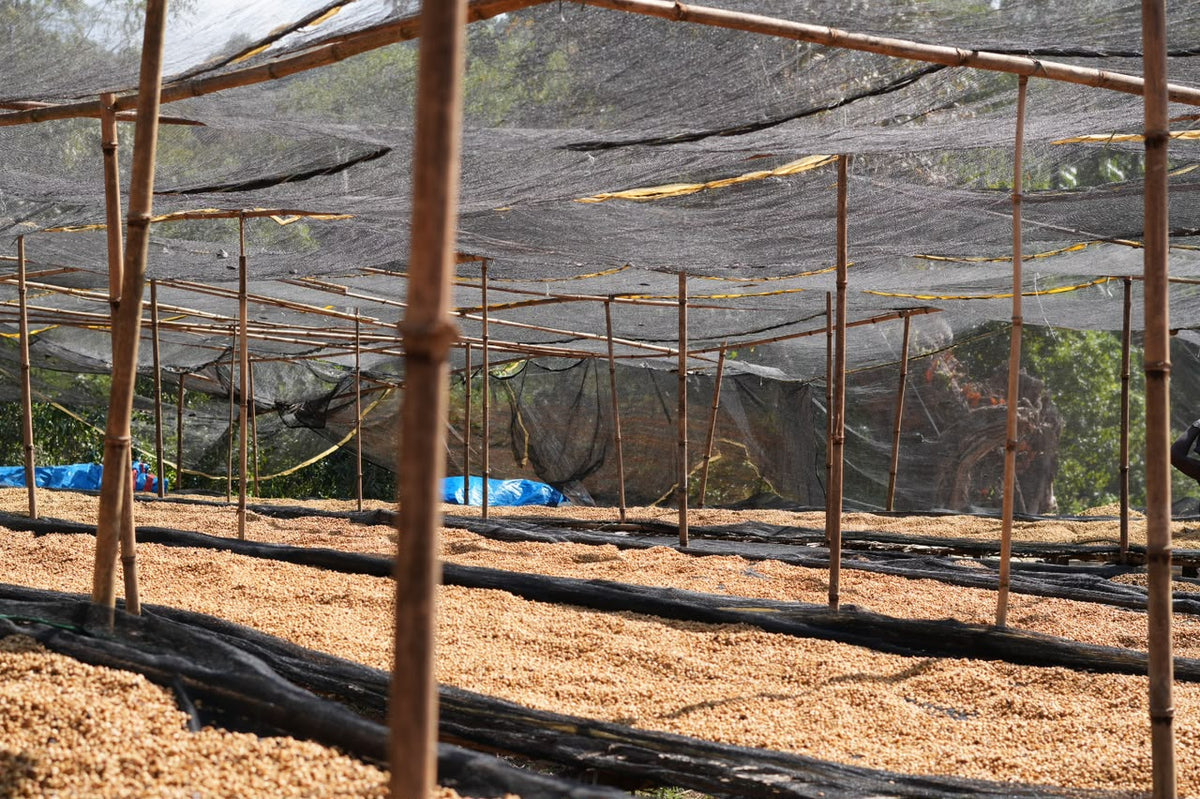
Anoxic 'Yellow' Honey: Fully ripe cherries are harvested and delivered to Weessi station. Sorted on arrival and depulped, with mucilage retained on the parchment. Fermented for 48 hours in a sealed plastic tank under anoxic conditions, before moving to raised beds to dry under shade for 21 days. |
Import Partner: |
Direct with Sookoo Coffee, Logistics via Osito |
Harvest: |
Crop 25/26, Arrived UK: 22/07/26. First harvest buying from Weessi Tima. Fourth season buying from Sookoo |
The Story
Weessi (the spelling we've used direct from Ture, but we've also seen Weesi/Wessi since there's no 1:1 transliteration from Ethiopian alphabets to the Latin one we use for English) is the third station set up by Sookoo coffee in the sub-kebele of Tima in Odo Shakiso. Opened in 2023, Weesi processes cherry from Tima and Bookkisa.
As we've banged on about - this season from Ethiopia was heavy on special preparations, as high cherry prices made value-add processing heavily financially incentivised at the washing station level. One of Ture's specialities has always been incredibly well executed clean coffees - even the anoxic naturals with heavy in-cherry ferments (read: unavoidably process forward) are crisp, complex and maintain a huge amount of distinct origin character, rather than present purely of fermentation flavours. One of the elements Ture emphasises is ensuring the drying process is disciplined and precise.
This means extremely thin layers of cherry or in this case, parchment coffee with the mucilage left on - so that fermentation is minimised during drying, with frequent turning so drying is even. The quality is incredibly consistent across all of Ture's stations - and we appreciate as buyers that the coffee is incredibly stable. When we first featured Bookkisa we were a young scrappy start up roastery, slot roasting and we used a past crop G1 natural in a very early version of Facility. At the time the coffee was nearly 2 years since it was picked off the trees and while a little papery at a light roast degree, you'd have struggled to tell it was that long in the tooth when roasted for espresso - it still presented plenty of the classic berry/floral/citrus notes we expect from a Guji natural. That stability and consistent excellence is one of the reasons we've worked with Ture for every season since.
Ture's mission is the promotion of coffees from Guji - and it's grown to become one of our favourite regions in Ethiopia, with many of the lots we feature coming from this zone. East of Gedeo and southeast of Sidama, the region is incredibly fertile, with good rains, high altitude and near perfect weather for excellent production.
- Choosing a selection results in a full page refresh.
- Opens in a new window.