

![The landscape around Concepcion Huista, Guatemala [Photo Credit: Primavera Coffee]](http://scenery.coffee/cdn/shop/files/ConcepcionHuista_CredPrimavera_scaleddown.jpg?v=1761047285&width=1946)
![West of Concepcion Huista, looking north onto Jacaltenango [Own photography]](http://scenery.coffee/cdn/shop/files/IMG_20190228_095203.jpg?v=1761047285&width=1946)
![Co-operative El Sendero offices, Guatemala [Photo Credit: Primavera Coffee]](http://scenery.coffee/cdn/shop/files/ElSenderoCo-op_CreditPrimavera_7.jpg?v=1761047285&width=1946)
![Guatemala - Paya by Nery Pablo [25/26]](http://scenery.coffee/cdn/shop/files/guatemala_paya_2526.png?v=1781272667&width=1445)
![Guatemala - Paya by Nery Pablo [25/26]](http://scenery.coffee/cdn/shop/files/Copy_of_20250827_094046.png?v=1761047285&width=1445)
![Guatemala - Paya by Nery Pablo [25/26]](http://scenery.coffee/cdn/shop/files/Copy_of_20250827_093405_1.heic?v=1761047285&width=1445)
![Guatemala - Paya by Nery Pablo [25/26]](http://scenery.coffee/cdn/shop/files/Copy_of_IMG-20250917-WA0000_1.jpg?v=1761047285&width=1445)
![Guatemala - Paya by Nery Pablo [25/26]](http://scenery.coffee/cdn/shop/files/Copy_of_IMG_8831.jpg?v=1761047285&width=1445)
![Guatemala - Paya by Nery Pablo [25/26]](http://scenery.coffee/cdn/shop/files/PXL_20240312_230115097.jpg?v=1761047285&width=1445)
![The landscape around Concepcion Huista, Guatemala [Photo Credit: Primavera Coffee]](http://scenery.coffee/cdn/shop/files/ConcepcionHuista_CredPrimavera_scaleddown.jpg?v=1761047285&width=1445)
![West of Concepcion Huista, looking north onto Jacaltenango [Own photography]](http://scenery.coffee/cdn/shop/files/IMG_20190228_095203.jpg?v=1761047285&width=1445)
![Guatemala - Paya by Nery Pablo [25/26]](http://scenery.coffee/cdn/shop/files/PXL_20240312_175320802.jpg?v=1761047285&width=1445)
![Co-operative El Sendero offices, Guatemala [Photo Credit: Primavera Coffee]](http://scenery.coffee/cdn/shop/files/ElSenderoCo-op_CreditPrimavera_7.jpg?v=1761047285&width=1445)
Brew Guide:
Best Brewed with: Filter
Light Roaster Influence: We really do find that classic varieties from Guatemala tend to benefit from a slightly slower roast approach and a touch more development than our "lightest" style - as they otherwise tend to be a little starchy when they're too light. When we add a little more roaster influence through more time and temperature in the roaster, it's what's needed to make the sweetness and acidity pop.
Best Rested: 3+ Weeks
Filter: 62g/L, 96°C when fresh, but with rest can go down to 92°C & 60g/L
Espresso: 18g in, 40g out, 28-32s classic style best
We're tasting: Sweet pastry aromatics - pear & apple danish, with toasted hazelnuts. In the cup it's got a big apple acidity alongside a gentle nutty character that reminds us of russet apples, with honeyed sweetness and supporting notes of pomegranate, pear, and golden sultana. On cool that nuttiness evolves to a more vanilla-like biscuity sweetness that's pure custard creams. Definition of a comfort coffee, but with enough acidity and complexity to satisfy and never bore.
Traceability
Country of Origin: |
Guatemala |
Region: |
Concepción Huista, Huehuetenango |
Producer: |
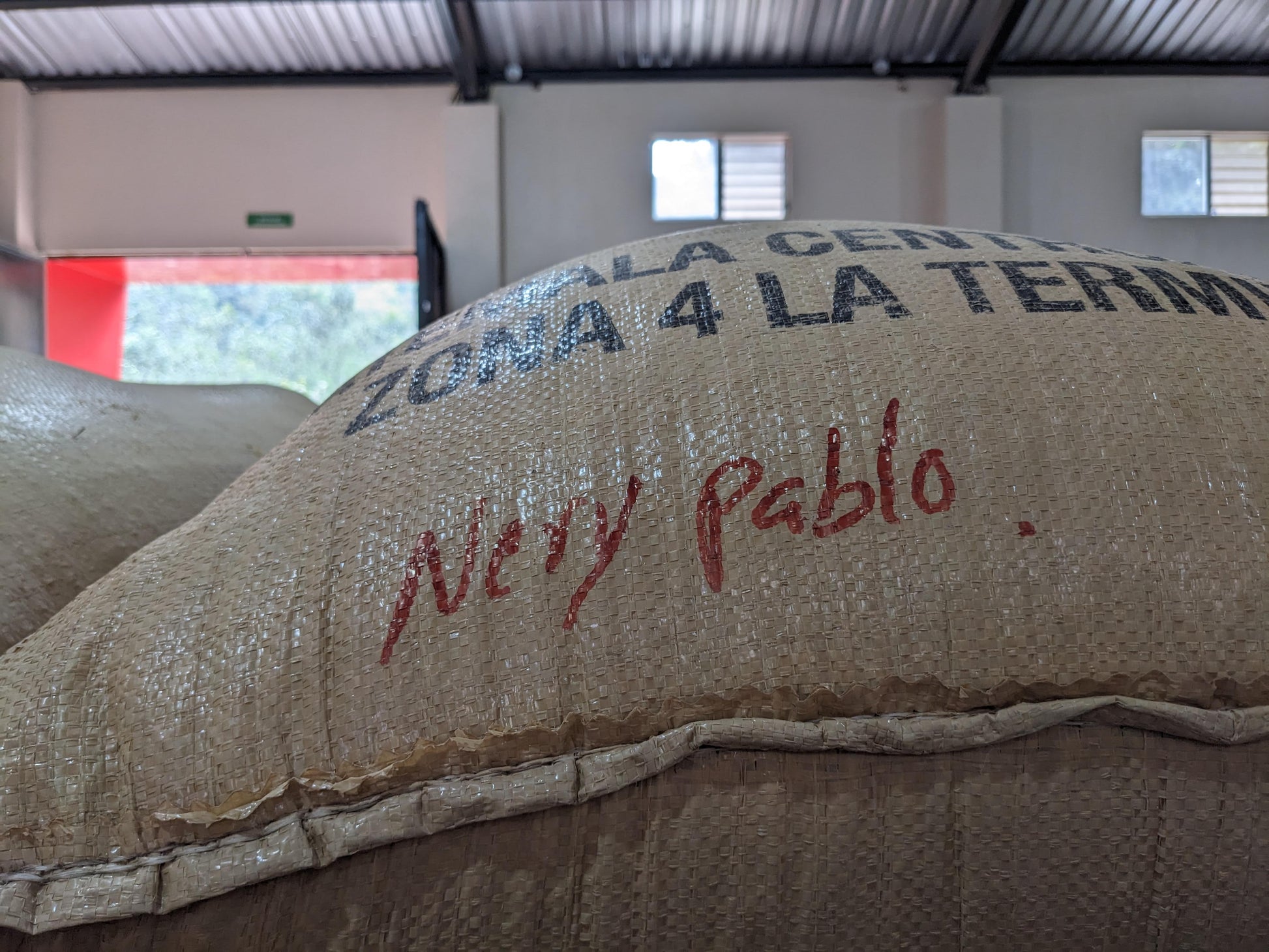
Nery Pablo |
Farm: |
Paya |
Variety: |
Caturra and Bourbon |
Elevation: |
1650 MASL |
Process: |
Traditional Washed: Picked and processed at Nery's house, with processing overseen by Nery's wife. Unlike a typical Huehuetenango wet fermentation, cherries are depulped and dry fermented in parchment for 32 hours. The coffee is then washed and dried on a patio over 6 days. |
Import Partner: |
Primavera |
Harvest: |
Crop 25/26 - Arrived UK: 04/06/26. Fourth harvest purchasing coffee from Nery. |
The Story
The 25/26 Guatemalan harvest could be seen as an exemplar of the challenges facing modern coffee production, especially those in Central America but also globally. Wild swings in the C-price of coffee over the last year - from record highs, volatility up and down with geo-politics and harvest conditions, and now steady drops ahead of a record Brazil crop. Guatemala has always been exposed to the effects of climate change on coffee - with heat and disrupted rainfall always a concern, this latest harvest saw La Niña-influenced conditions, early flowering that was followed by a severe cold snap that delayed the latter half of the harvest.
We've observed that climate change is slowly marching on Guatemala - altitudes previously thought of to be cool highlands are slowly warming, and the sparkly bright acidities that could be found from these regions - while still there - are not quite as abundant as previously. But altitude and temperature is not everything - soil health, good farm practices and good fermentation can produce superlative cups, it's just harder when the climate is hotter and rainfall uncertain. With conditions set for a super El Niño ahead of the next harvest (associated with heatwaves and drought in Central America), it's likely that after a period of profitability and farm re-investment during the high C-market, that producers in Central America could be facing a very tough year, perhaps multiple if the full forecast impacts are felt.
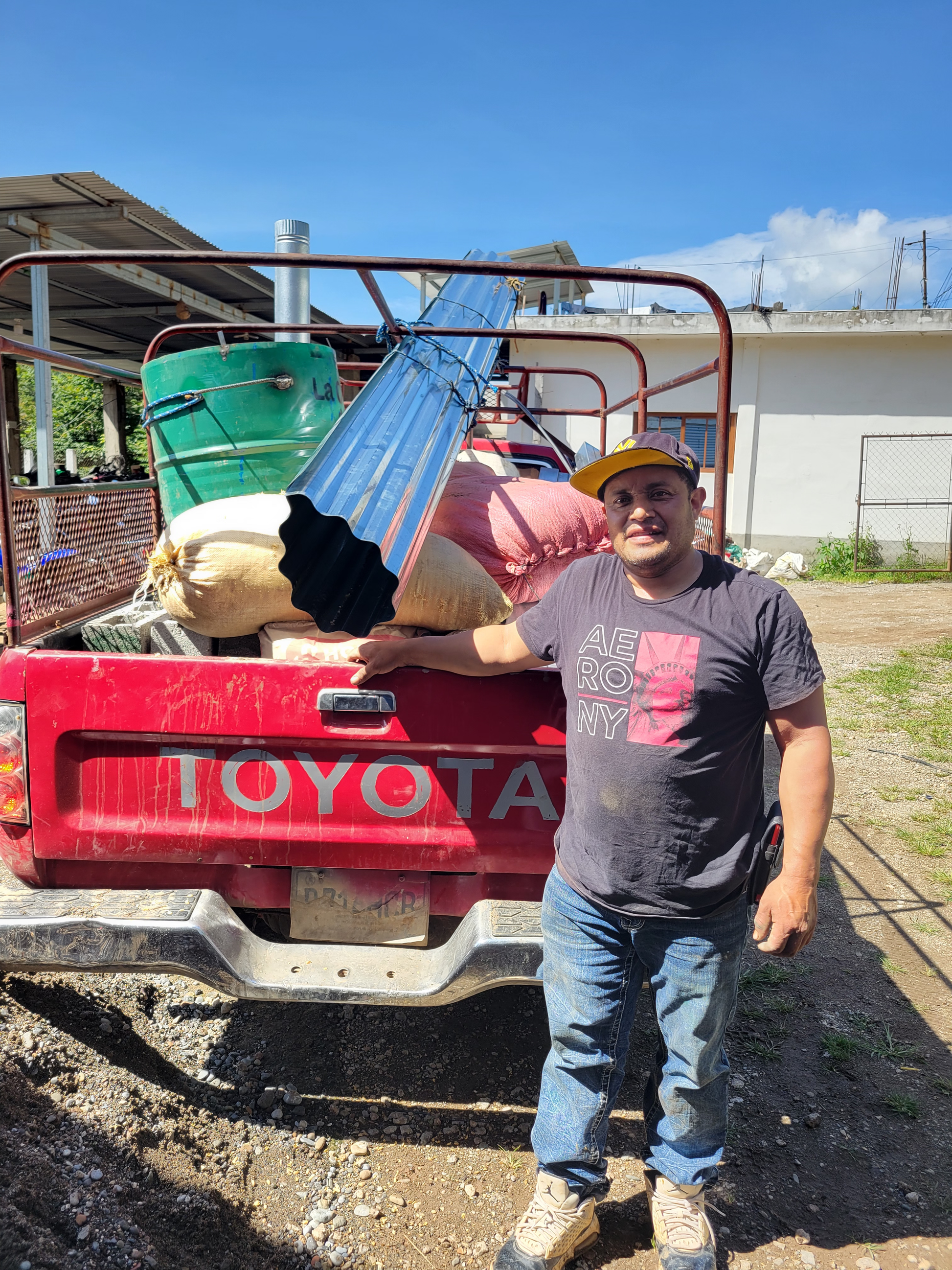
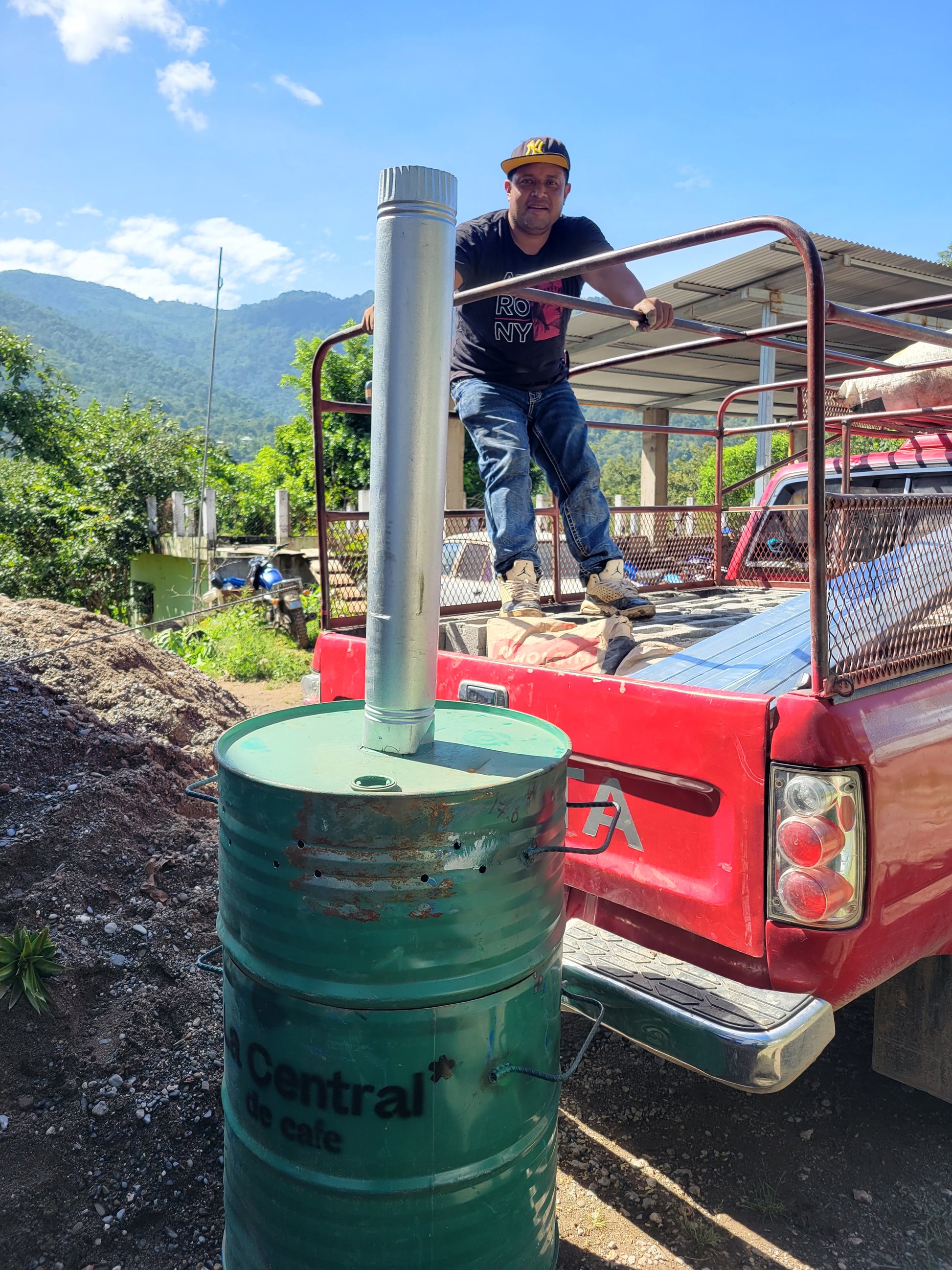
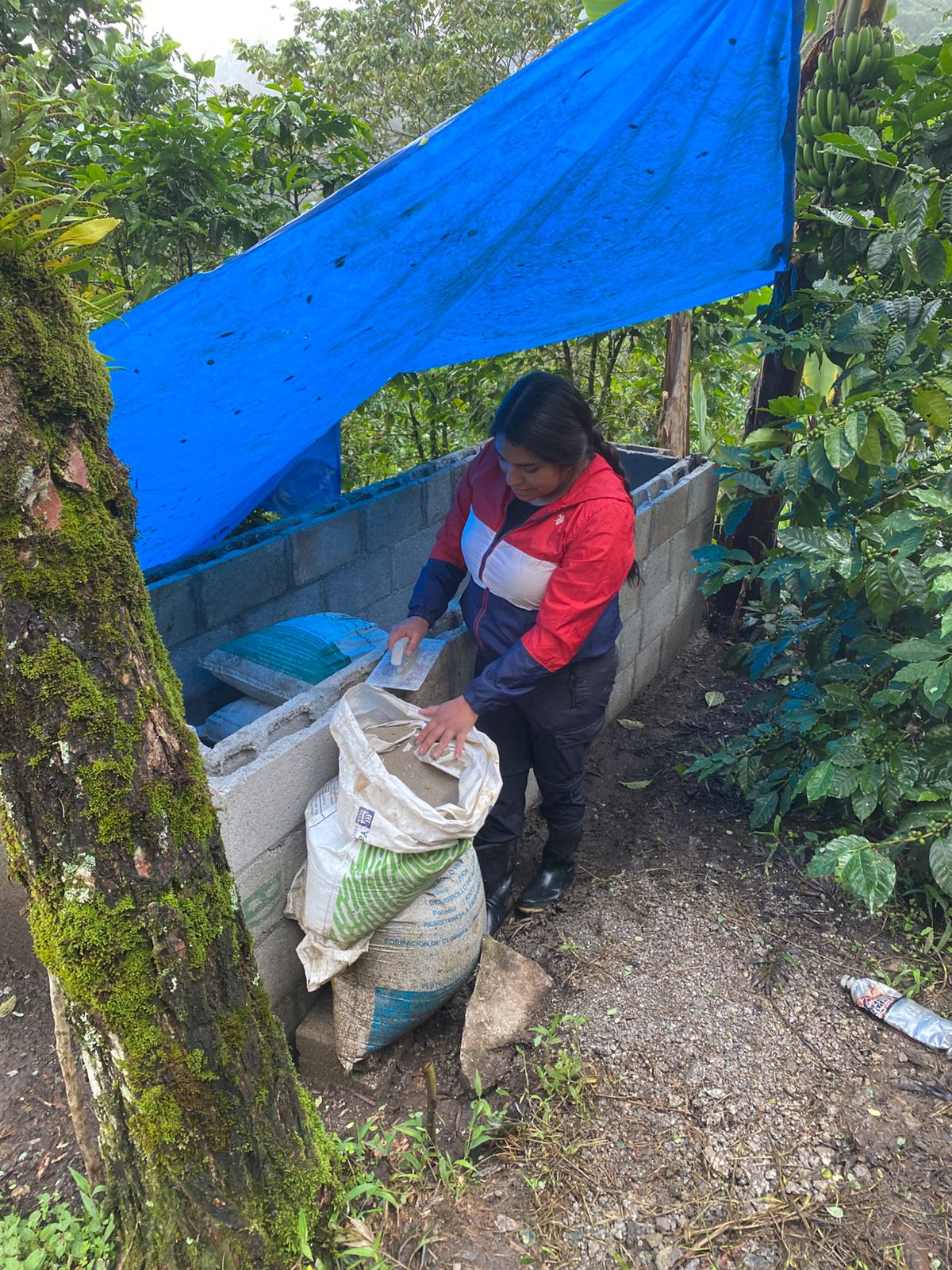
That's why we're stoked on Primavera's sustainability projects - distributing biochar ovens and vermiculture (worm composting) kits, of which Nery is a part of the pilot project. Biochar is a specialised form of charcoal that is an incredible soil amendment, helping retain moisture, nutrients and encourage microbial growth, and worm composting is effective for creating organic composts from waste products on the farm (such as the pulp from coffee milling). Using regenerative agriculture techniques such as these, as well as encouraging producers to plant shade trees and providing agronomic support, farms can continue to produce excellent quality even through the most challenging conditions, and by reducing reliance on bought-in inputs, improve on-farm profitability.
Farms that rely on expensive agrochemical inputs & full sun production may produce higher yields in good years, but it comes at a cost of brittleness - stressed trees and lower soil microbial diversity leaves them less resilient to disease, pests and climatic effects. It's this style of production that is most exposed to the effects of climate change - and indeed of geopolitics, as the shutdown of the straits of Hormuz has massively hiked the cost of fertiliser, another knock on effect that due to coffees long harvest cycle (yearly, taking 9 months for cherry ripening from flowering) - we won't truly start to see the impacts of till 2027.
This is where we feel it's important as roasters to continue to be stable partners - if you flit about, always searching from the hypest lots, the most advanced processing or newest variety and cancelling contracts when a coffee lands .25 points under spec, you might build a reputation for quality amongst those who drink your coffee - but you are slowly and silently eroding the very foundations of the model that supports speciality coffee in the first place. This is why we've always made sure to have a broad base of coffees, from the fun and cutting edge but also from the approachable and comforting, because those are oft from producers who stand to benefit the most.
We love Nery's coffee - it might not be a floral Gesha, a newly genetically identified landrace, or need 10 words before even getting into the long form processing details, it's exactly the sort of coffee we want at 6:30am, bleary eyed and setting the roast schedule for the day - and if that first cup sets the tone for the day, it's a good vibe.
Nery Pablo & Finca Paya:
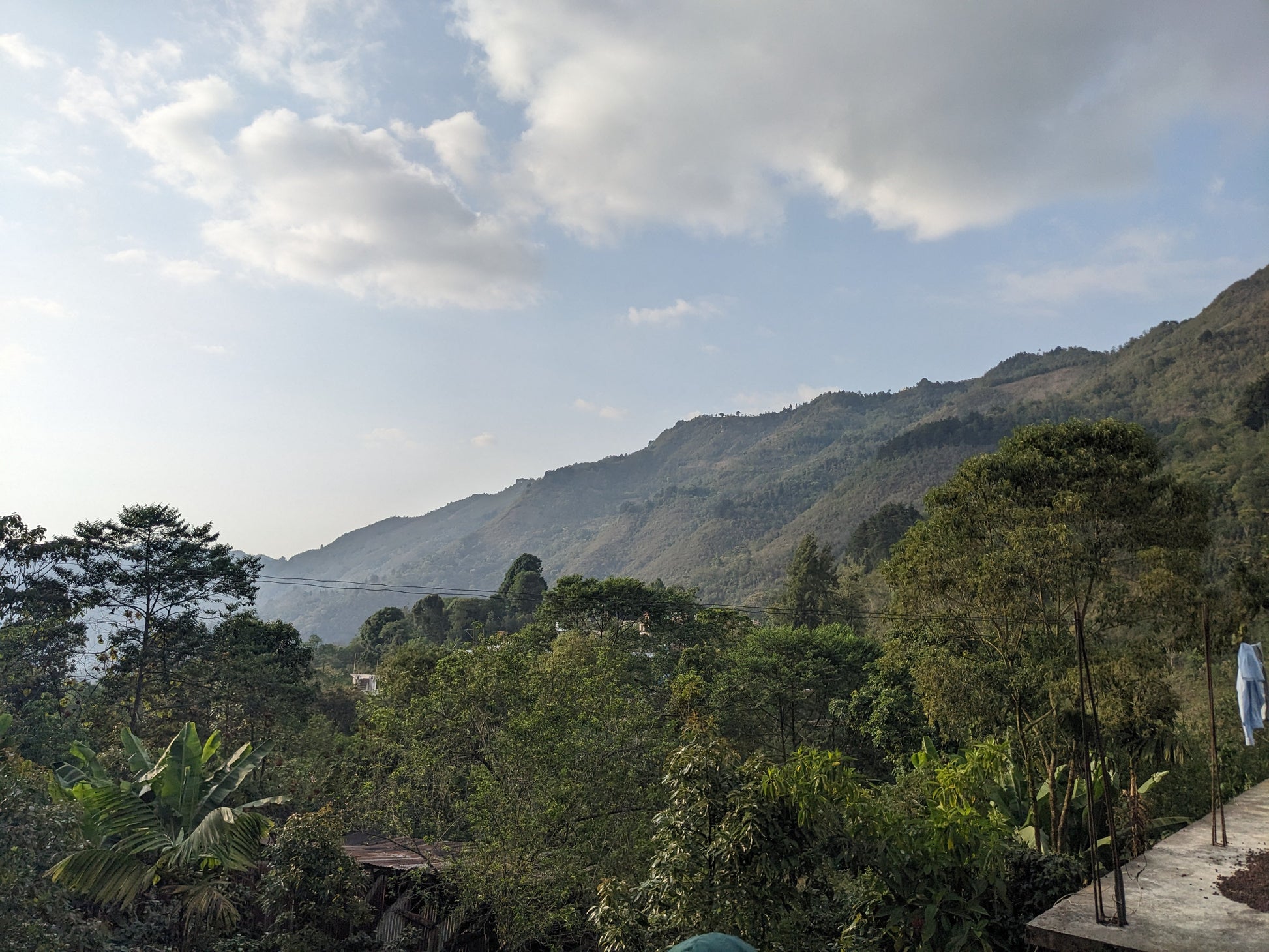
Our co-founder Alex visited Guatemala in 2019 with Primavera coffee, and during this trip he was lucky enough to visit Cooperativa El Sendero, a co-op in Concepción Huista.
We’ve always loved the profile of high-grown coffee from this region, balanced sweet cups that have a little bit of something for everyone - caramels, soft fruits, florals, sometimes even a little bit of a tropical character. Lower altitude production can tend towards more chocolate and nut flavours intermingled with the soft fruity tones, meaning this region really does have something for everyone. Overall if we wanted a big chuggable mug of batch brew to start our day, from any region of any coffee producing country in the world - it’d probably be a fresh crop Huehue.
With that in mind, we’ve selected this lot from Nery Pablo for that exact purpose - an elegant yet approachable coffee, in an eminently smashable brew. The coffee from the producers in Coop El Sendero, located in Concepcion Huista, has always held a place in our hearts and we’re stoked to get the chance to keep buying, roasting and brewing it. The cooperative, with 196 members including 62 women and 134 men, emphasises gender equality and the empowerment of young coffee producers.
Nery Pablo is a second-generation coffee producer, who inherited a parcel of land in 2010. A few years into his journey, he became a member of the El Sendero Cooperative. This affiliation provided him with invaluable marketing opportunities for his coffee and access to workshops and agronomy expertise, as well as microcredit. As a result, Nery experienced a significant enhancement in both the productivity and quality of his coffee.
His farm, named "Paya’" - a term from the Popti Mayan language signifying "Birth of the River" is aptly named after the mountainous region where a river originates, and is a common farm name in the area.
The family process their coffee at their house where they first pulp the freshly picked coffee (using a machine that removes the seeds from the cherry skin), before employing a slow dry fermentation process, taking 32 hours due to the cool high-altitude conditions. Post-fermentation, the coffee is washed and then soaked in clean water before moving to a patio for drying, a process that takes 5-6 sunny days and requires hourly turning to ensure even drying. This meticulous process contributes significantly to the coffee's dense and layered profile. Nery's wife plays a pivotal role in overseeing the processing and drying phases of the coffee production
- Choosing a selection results in a full page refresh.
- Opens in a new window.