


Brew Guide:
Best Brewed with: Espresso
Medium-Light Roaster Influence: While it's still super dense and well sorted so we can hit it hard with heat for a faster overall roast, we're quite deliberately extending the end of the roast and hitting a hotter end temperature. Moving past peak clarity, further still past peak acidity, and to the point the cup presents as cooked fruits, caramels and that rich almost savoury note that marks a classic + well developed Kenyan. Told you it was old-school (this would have been a classic filter roast back in the day, mind)
Best Rested: 3+ Weeks
Filter: 65g/L, 94°C, touch coarser - likely go down to 90°C when rested
Espresso: 18g in/45g out/30-35s - real classic style 1:2.5 vibes. Might show more roast character with turbo/soup style
We're tasting: Classic Kenya espresso aromatics - buttery stewed fruits & caramels, alongside brûléed grapefruit. In the cup it's syrupy and dense with purple grape juice, blackcurrant jam, dark honey and butter as the front notes, and a distinct cola-bottles esq note to the finish. Bright + rich, super nice.
In Milk - Blackberry Pannacotta
Traceability
Country of Origin: |
Kenya |
Region: |
Gatundu South, Kiambu County |
Producer: |
Ritho Farmers' Cooperative Society |
Farm: |
Wamuguma Factory |
Variety: |
SL28, SL34, Ruiru 11, Batian. (AA Screensize) |
Elevation: |
1700 - 1900 MASL |
Process: |
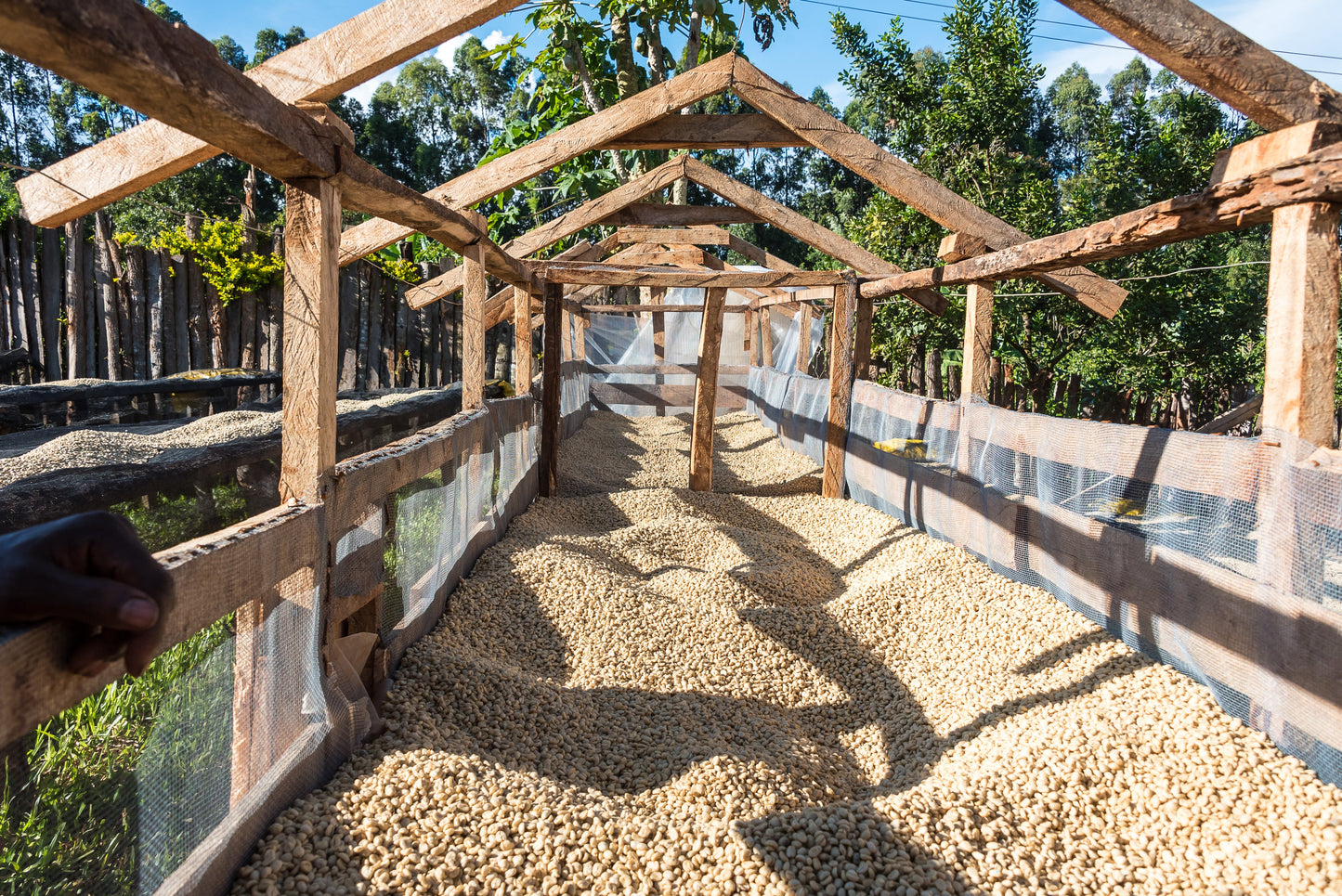
Traditional Washed: Selectively picked cherries are delivered by smallholders to Wamuguma Factory, where they are sorted at intake, then pulped and fermented for 12 to 16 hrs before soaking. The parchment is washed in clean water to remove remaining mucilage and laid out to dry over 7 to 15 days, raked frequently and covered during the hottest hours of the day and overnight to shelter against moisture. |
Import Partner: |
Sucafina |
Harvest: |
25/26 - Main crop October–December 2025; Arrived UK June 5th 2026. New Purchasing Relationship |
The Story
Wamuguma is one of two wet mills run by the Ritho Farmers' Cooperative Society, which draws its membership from smallholdings spread across Gatundu South in the southern part of Kiambu County. As with most Kenyan coffee there is no single farm behind the lot, but rather a body of growers tending small plots who deliver selectively picked cherry to the central factory, where it is pooled, processed and prepared for sale on their collective behalf. This co-op model that has long underpinned Kenyan smallholder production, and the factory is both the processing hub and the point at which a few sacks of cherry from any one member become a marketable lot. There are of course also larger estates and single farms that can produce enough to be exportable, and can even get international acclaim for their quality - but we've generally tended to prefer the impact that comes from a classic factory lot, helping support hundreds to thousands of farmers at a time.
Kiambu has all the classic the conditions that built Kenya's name as a washed-coffee origin - high elevation, deep red volcanic soils and a dependable wet and dry cycle (although no country in the coffee belt can be said to have totally "dependable" weather any more, as climate change marches ever on), and the processing at Wamuguma is still the classic washed + soaked method that people theorise is one factor in that classic Kenyan cup profile.
Kiambu's position immediately north of Nairobi makes its coffee land some of the most contested in the country, where subdivision, climbing land values and the steady pull of urban development continue to thin the county's coffee acreage. A society like Ritho holding its ground and still turning out speciality-grade coffee is great to see, and as it comes off the back of record prices at the coffee auction & ongoing sector reforms to return a greater share of the final value to the growers themselves it gives us hope that those classic Kenyan counties will continue to be productive in the facer of increasing pressure
- Choosing a selection results in a full page refresh.
- Opens in a new window.