


Brew Guide:
Best Brewed with: Filter/Espresso
Lightest Roaster Influence: We've taken the slightly longer overall roast time we found to work well for the Tekisic FW, but adapted the energy input and reduced the end of the roast time to be more appropriate for the post-harvest processing. We found this coffee is great at a lightest influence, so we're keeping that end of roast short and cool.
Best Rested: 3 weeks
Filter: 64g/L, 92°C when fresh but when well rested you can go down to 90-91°C
Espresso: 18g/44g/30-34s - we quite like this as trad espresso, but can do a 50g/20-22s turbo too
We’re tasting: Bright fruity aromatics - wild plum, bubblegum & cherry. In the cup it's incredibly reminiscent of an aged cherry kriek - with lots of macerated morello cherry notes and interesting fermentation character. As it cools there's the juicy acids of granny smith apple, and quince jam, with the muscovado, brown spice and malty assam notes of the tekisic providing a perfect sweet base for the process-forward top notes.
Traceability
Country of Origin: |
Nicaragua |
Region: |
Mosonte, Dipilto |
Producer: |
Cynthia Morales |
Farm: |
Las Tres Hermanas |
Variety: |
Bourbon Tekisic |
Elevation: |
1500 - 1650 MASL |
Process: |
Carbonic Macerated Natural: Ripe cherries picked at Las Tres Hermanas then transported to the Bridazul beneficio. Cherries sealed in temperature-controlled tanks where CO₂ creates an anoxic environment, promoting fermentation from within the cherry (enzymatic) as well as from natural yeasts in the mosto over several days. Cherries removed once gelatinous in texture and pre-dried in thick layers on African beds within the cold room, before final drying on raised beds in the sun. |
Import Partner: |
The Good Sourcing (FR) |
Harvest |
Crop 24/25, Arrived EU: 25/09/25. New Purchasing Relationship |
The Story
This is our second year buying through The Good Sourcing, a French importer whose Central American network offers a more interesting range than perhaps we might find through the more established UK-based importers, such that we're happy to take on the faff of moving coffee from Europe to the UK once it lands. Last year's La Cascada from Max Padilla ran as our house filter; this year we've gone deeper into their Nicaraguan offerings with two lots from Cynthia Morales.
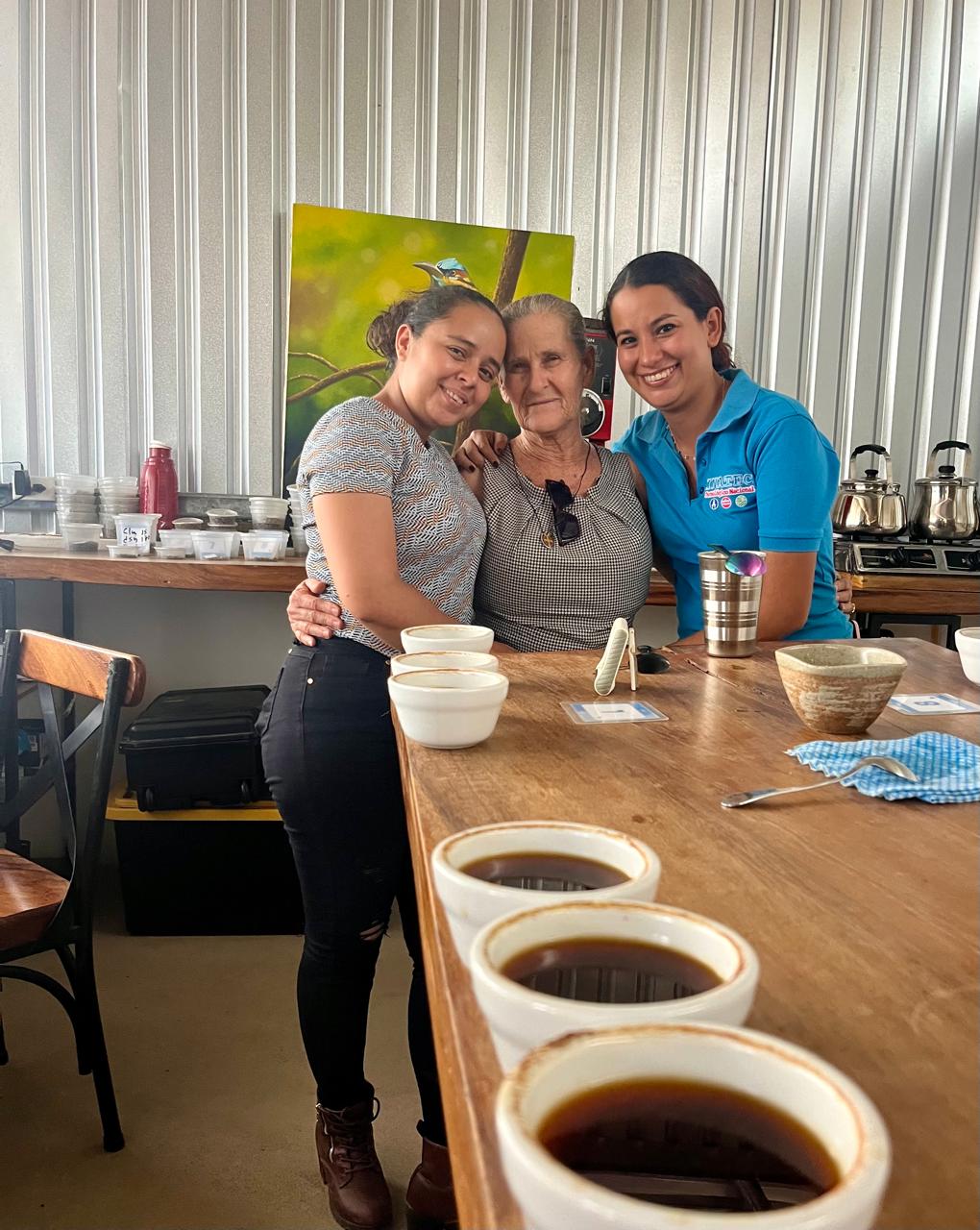
Cynthia inherited Las Tres Hermanas (named for her and her two sisters) from her father. The farm sits high in the Dipilto mountains near the Honduran border, with the highest parcels reaching 1,600 metres growing under native shade trees. Alongside running the farm, she teaches coffee cultivation through a government-funded national programme, as one of several women in leadership positions within the Bridazul network.
Claudia Lovo established Bridazul in 2019 to support small and medium-scale producers in Nueva Segovia with agronomic monitoring, training, and pricing designed to cover production costs. Around fifty farms now work with the project. Claudia and her partner Sasa Sestic had built a reputation in the region through their early work applying carbonic maceration to coffee in the early 2010s, and Bridazul grew partly from neighbouring farmers seeking access to their infrastructure and expertise.
Bridazul also runs a physical "beneficio", a larger communal processing and drying station common across Central American coffee production where wet parchment or cherry is brought for controlled drying after initial farm-level picking & processing. For smallholders without the capital to build drying infrastructure, access to a well-run beneficio is often the difference between commodity and speciality pricing. Bridazul now supports around fifty farms in Nueva Segovia with agronomic monitoring, training, and pricing designed to cover production costs. The second lot we'll release from Cynthia as soon as there's space on the offer uses their carbonic maceration process.
Both lots from Cynthia are Bourbon Tekisic - a selection of the Bourbon variety developed by the Salvadoran Institute for Coffee Research between 1949 and 1977. The method was "mass selection": identifying the highest-performing plants, bulking their seed, and repeating across generations. Thirty years of work to isolate genetic lines with the best cup quality potential, not yield or disease resistance. Tekisic now makes up a significant portion of El Salvador's production and has spread across Central America, but it remains highly susceptible to leaf rust.
- Choosing a selection results in a full page refresh.
- Opens in a new window.