


Brew Guide:
Best Brewed with: Filter
Lightest Roaster Influence: Our smallest batch size yet, we've iterated lighter with each successive batch, finding more and more intensity to the aromatics and acidity*
Best Rested: 5+ weeks
*Based off the latest production cupping, this is an ultralight roast - will do best with extra rest
Filter: 60g/L & 95°C, with rest we like to move down to 93°C
Espresso: Turbo shots + 3 weeks rest. 18g/48g+ & 20s // EXCELLENT SOUP
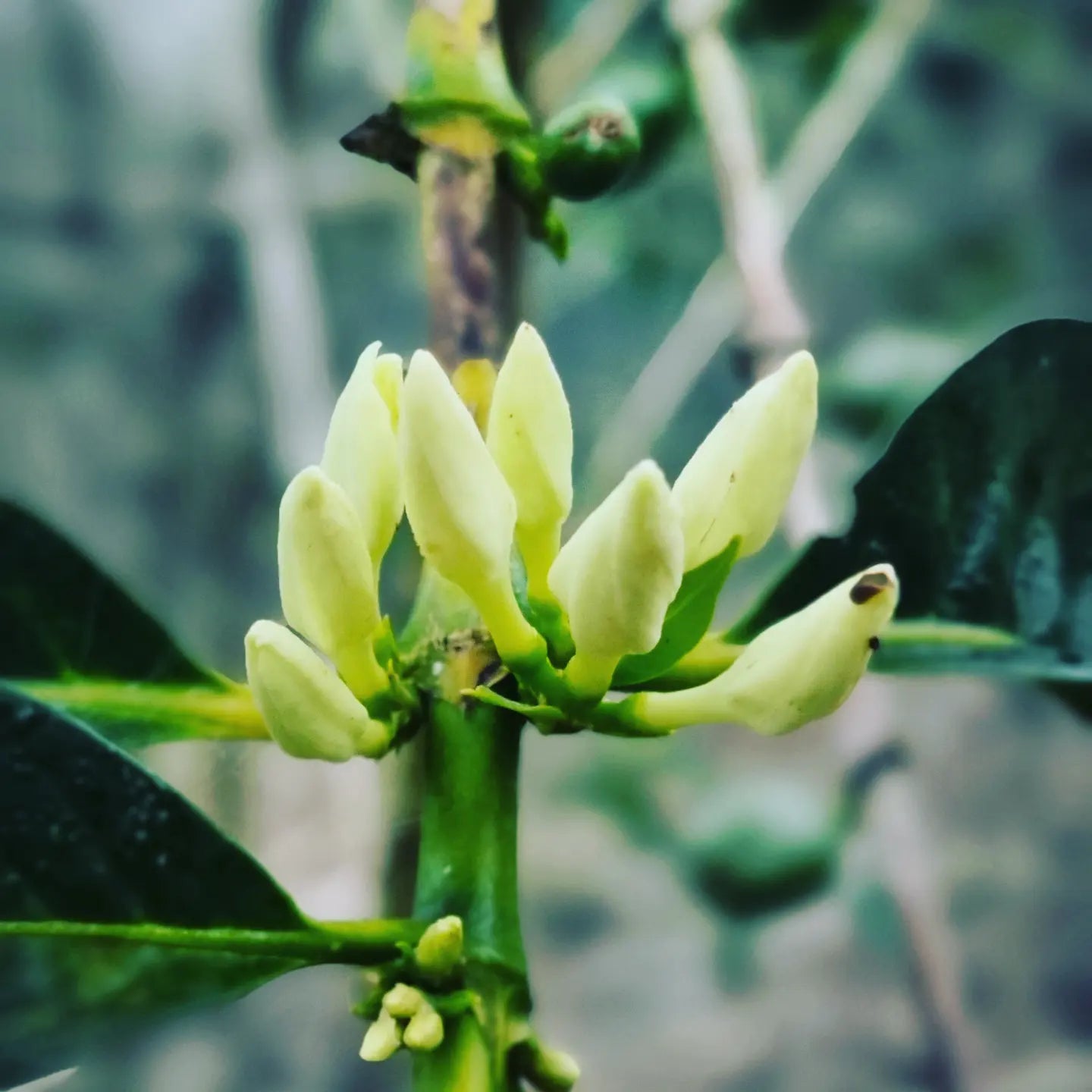
We’re tasting: Incredibly deep and rich floral aromatics - like coffee blossom and night blooming jasmine, as well as buddha’s hand citron zest. In the cup it has the sweetness of raw wildflower honey, white peach and juicy comice pear, a buttery body, and bergamot and lemongrass hints adding lift. The acidity is multifaceted but broadly citrus driven - we find meyer lemon while hot & yuzu on cold.
It tastes like the platonic ideal of an Ethiopian washed coffee.
Traceability
Country of Origin: |
Peru |
Region: |
Colca, Yanatile, Calca, Cusco |
Producer: |
Edwin Herrera Ocampo |
Farm: |
Tarraga |
Variety: |
SL9 |
Elevation: |
1950 MASL |
Process: |
Anoxic Washed: Ripe cherries picked, floated & skimmed before de-pulping. Parchment dry fermented in sealed timbos (air-locked barrels, creating an anoxic environment) for 36 hours, before washing. Dried under shade on raised beds over 18 days. |
Import Partner: |
Que Onda |
Harvest |
Picked September 2025 - Crop 25/26, Arrived UK: February 2026. New Purchasing Relationship |
The Story
A recent research piece from Christopher Feran on SL9, traces it as a cultivar selected at Kenya's Scott Laboratories (the origins of SL-28 & SL-34) in the 1930s that was thought to have never been commercially distributed due to its susceptibility to Coffee Berry Disease. This variety was among Ethiopian-legacy germplasm potentially distributed to tropical research stations across the Americas, including Peru's Tingo Maria Experimental Station. Variety trials conducted from the 1950s onward saw this material planted across the surrounding highlands before spreading through the country as farmers migrated and propagated from seed. Buyers recognising distinctly Ethiopian cup characteristics naturally assumed it was Gesha, likely a Panamanian accession, and the name ("Inca Gesha") stuck - but it's now reaching international acclaim.
We can add something to this story. In 2019, our co-founder & head of coffee Alex travelled to Kenya on a sourcing trip with his previous employer. Having visited a dry mill, he asked for some Mbuni (tree dried cherries, picked end of season and sold on the internal market) from a station they had worked with - to bring back as a training aid for Stu, one of the other co-founders of Scenery and at the time, Barista trainer.
On a punt, they germinated some of those cherries - 2 out of 50 made it past the cotyledon leaf stage, and Alex kept one on. 7 years later, that tree has been kept alive - even producing a harvest of 500g of cherries that were processed and cupped at an event in Manchester in 2025. Having decided to send bean samples of Luis Camacho's Fragancia to be genetically tested, we included a leaf sample from the tree - now growing in the Scenery café. And it's come back as SL9 - which means we can say there is atleast one data-point for SL9 still being commercially cultivated in Kenya, adding to the variety history.
Edwin Herrera Ocampo farms at Tarraga, at 1950 MASL in Colca, a dispersed rural locality within the Yanatile district of Calca province, Cusco.
Yanatile sits in the ceja de selva, the transitional zone where the Cusco Andes descend into jungle. The district is remarkably remote; few farms have road access and producers routinely walk hours across steep, forested slopes to reach their plots. Coffee production here is small-scale and family-managed, and the processing infrastructure reflects that context, with fermentation and drying typically carried out close to producers' homes rather than at centralised facilities.
Peru has quietly been producing coffees of extraordinary quality for years, but the combination of improved traceability, stronger import partnerships, incredible growing conditions (especially extraordinarily high altitudes, which we will be exploring with future releases) and growing international attention on cultivars like SL9 means the country is entering a new phase of recognition.
Whisper it - but Peru is the new Panama. Not in the sense of over-capitalised rockstar farms with beaucoup premiums attached to the name, but in terms of an origin that we think is producing some of the best speciality coffee in the world right now.
- Choosing a selection results in a full page refresh.
- Opens in a new window.